Knowledge Base Organization 101
A few weeks ago we delved into the science of navigating and structuring a company’s knowledge base, and trust me, it was a conversation that left everyone in the audience buzzing with ideas. Especially because our panelists were Christianne Beasley - Principal, Knowledge Management at Getty Images with a background in library and information science; and Niall Thomas - Senior Manager in Internal Knowledge at Zendesk with a background in computer science and specialization in knowledge management. Who wouldn’t want to pick their brains?
In this article we go over some of the topics we covered and bring to you the golden nuggets that I'm sure will inspire you to get hands-on in your own knowledge management journey.
Stay in the loop for more events like this one, by following us on Linkedin.
How should I structure my knowledge base?
I know, structuring a knowledge base can feel like an Everest of a task, and it's often the first question that pops up when you're venturing into this realm.
"How should I structure my knowledge base?", “How can we meet the needs of different teams?”...
Well, our expert panelists, shed some light on how they went on about it and shared their wisdom with all attendees.
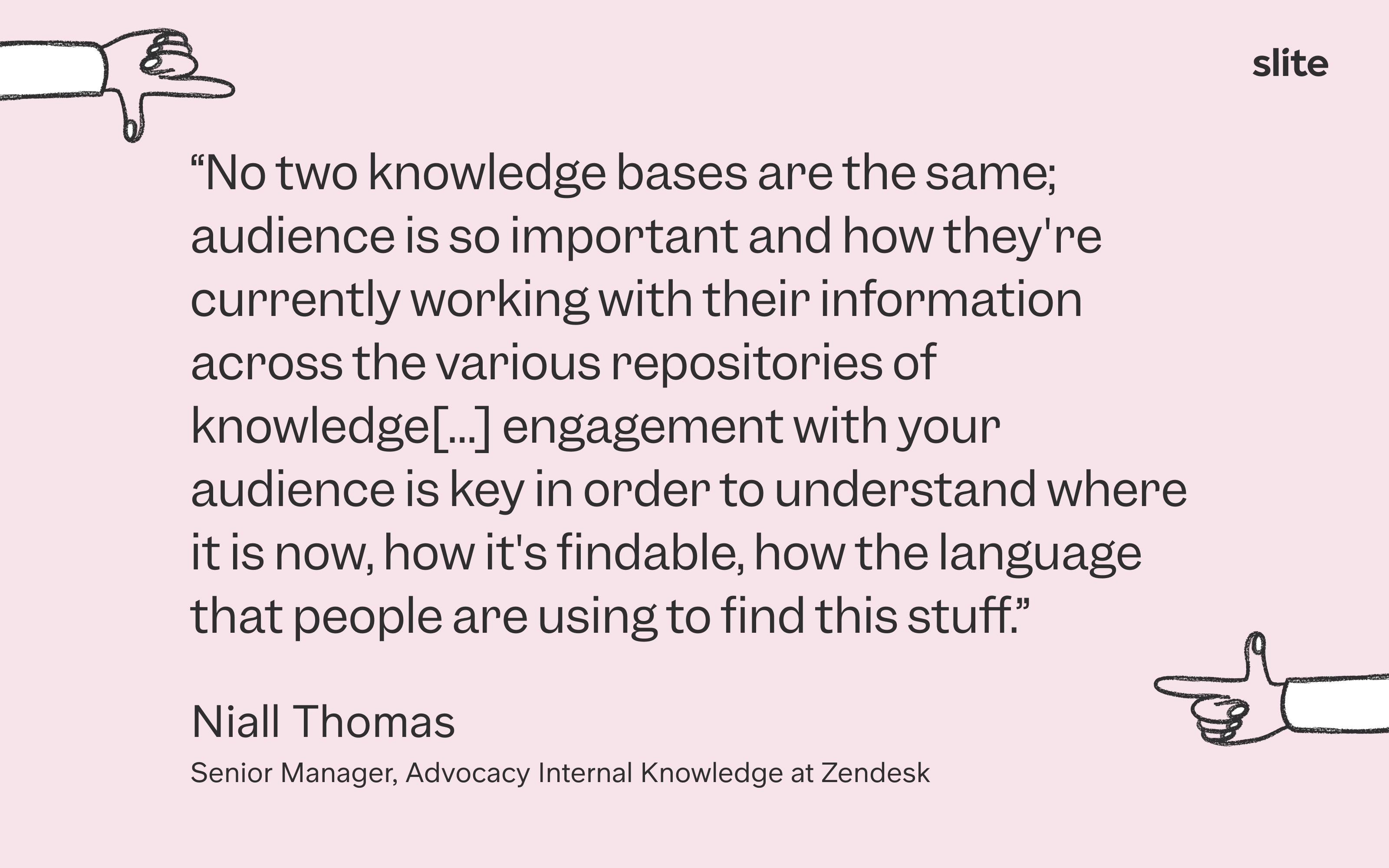
Christianne and Niall made it clear that there's no one-size-fits-all solution, no magical formula that can turn your knowledge base into a masterpiece overnight, a point Anouk explores in a recent article. But worry not; they've offered two simple, but key, practical insights that can help you navigate this labyrinth:
- Align your knowledge base structure with your organization's existing processes. Christianne suggested starting by understanding where your information is currently stored and how teams are using it. Are there processes in place that are working efficiently? If so, stick to that structure, but always ensure it doesn't hinder accessibility and collaboration.
- Use customer journey maps as a tool to guide the process, as they often reveal existing categorizations that work organically within the business. Niall chimed in with his experiences and highlighted the significance of the audience. The key takeaway here is to work closely with your team to comprehend how they search for information so you can adapt better.
Unlocking the Enigma of ROI
The conversation quickly tackled the elephant in the room: Return on Investment (ROI) in knowledge management. Many of us have pondered this question at some point, and it's no surprise that it's challenging to measure. As one of our speakers noted, knowledge management isn't a tangible asset; it's a living, evolving entity.
However, the true ROI of knowledge management lies in its integration into the core of your business. Think of it as an indispensable part of your operations, so deeply ingrained that your business can't function without it. When your knowledge base becomes the go-to source for critical information, you've hit the jackpot.
Nevertheless, while the speakers acknowledged that there isn't a single, magical number that signifies success, there are various metrics that, when combined, can paint a clear picture of the value brought by a knowledge base.
- Search Metrics: Analyze what users are searching for, successful searches and unsuccessful searches to understand their information needs.
- View Metrics: Track the number of views for specific knowledge base articles or sections.
- Time on Page: Assess how long users spend on a page, indicating the level of engagement and the extent to which the content is useful.
- Survey Data: Collect feedback from users to understand how the knowledge base has integrated into their workflows and contributed to their efficiency.
Success in this case can mean different things for different companies. In some organizations the aim is to reduce onboarding time, while in others the focus is on reclaiming knowledge from external sources, improving internal communication, enabling self-service for customers, or enhancing employee engagement.
Successful ROI in Knowledge Management can look like:
- Reclaiming Knowledge: Organizations may implement knowledge bases to bring their outsourced knowledge back in-house, ensuring greater control and access.
- Training Efficiency: By centralizing training content within a knowledge base, companies can reduce training time and ensure consistency in their training materials.
- Self-Service: For customer-facing knowledge bases, the goal might be to encourage users to self-serve, reducing the need for direct customer support.
- Remote Work Support: Knowledge bases can prove invaluable during remote work situations, providing a platform for employees to access essential information from anywhere.
But our discussion didn't stop at the theoretical level. Christiane and Niall shared practical tips for knowledge-based success. They stressed the importance of alignment with your own company. It's not about forcing your team to adapt to the knowledge base; it's about molding the knowledge base to fit seamlessly into their daily operations.
In essence, the knowledge base should be an extension of your team's work, a resource they can't imagine functioning without.
That’s why understanding how to get your team onboard is paramount.
How to get your team onboard.
As Christiane emphasized, involving end users from the earliest stages is ideal. Even before you start building the knowledge base, consider doing a Proof of Concept (POC) with different tools. This not only ensures that the tool aligns with your company's needs but also provides insights into how it will be used long-term. Moreover, Niall delved deeper into the concept of engagement, emphasizing that how people interact with your knowledge base is the linchpin of knowledge management. He likened knowledge management to a three-legged stool, where governance, taxonomy, and engagement are the legs. Without engagement, the stool collapses.
He provided valuable insights into how to work with individuals who might initially be hesitant about sharing their knowledge:
- Identify areas where teams face challenges or inefficiencies and use the knowledge base as a solution. You can turn skeptical users into enthusiastic advocates.
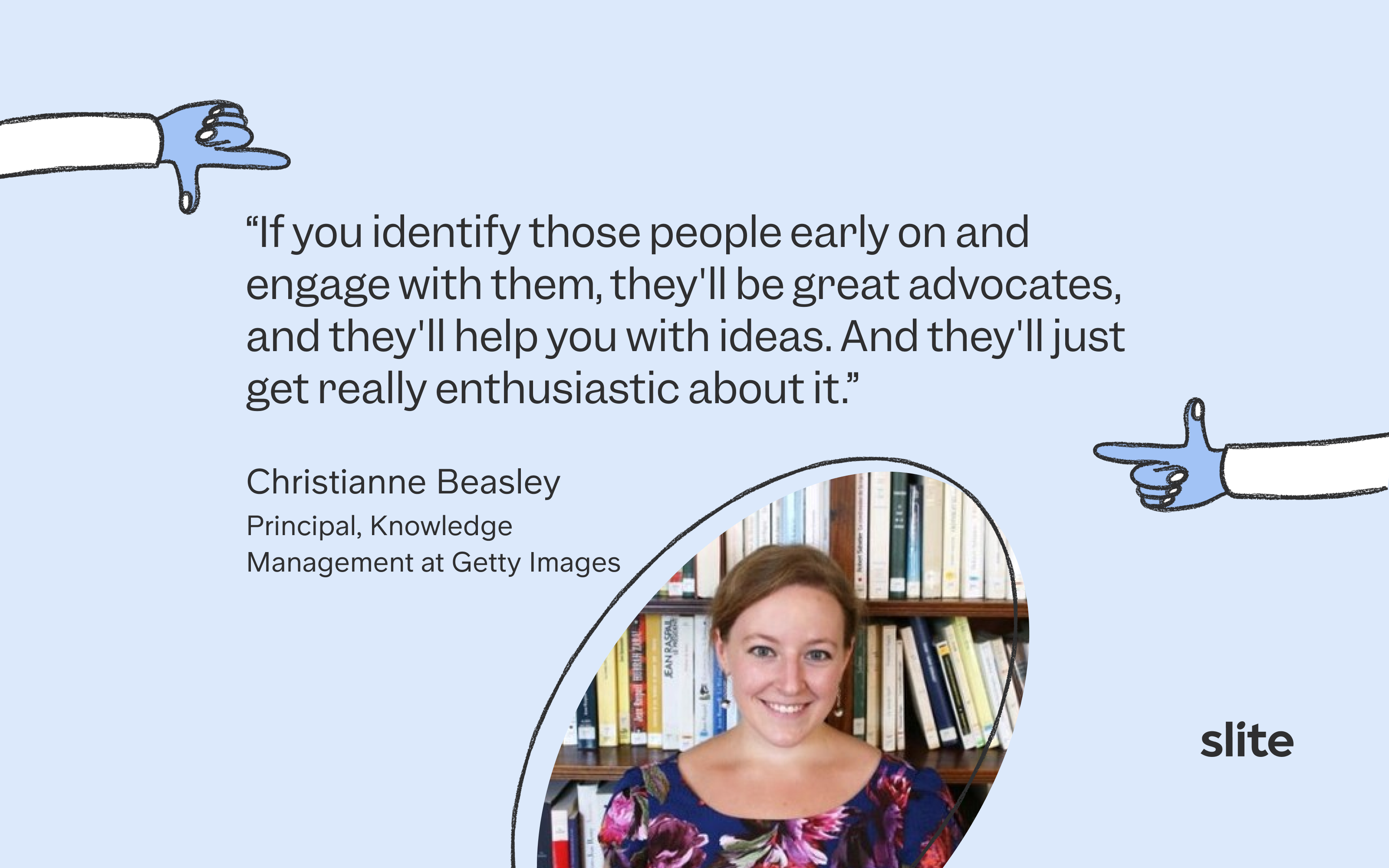
- Identify and engage with individuals within organizations who are "natural" knowledge managers, but often unaware of their own talents. Engaging with these individuals early on can lead to a treasure trove of ideas and unwavering enthusiasm for the knowledge base project.
Balancing Trustworthiness: Content and Expert Input.
A knowledge base is often hailed as the "single source of truth" or even the "brain of a company." But here's the twist—there are types of content that shouldn't find a home in your knowledge base. Christiane raised an essential question: What happens to outdated or irrelevant content?
The answer lies in a well-thought-out strategy. While you're structuring your knowledge base, consider what to do with content that's past its prime. Filtering out outdated information is crucial to maintaining trust and credibility. As Niall wisely pointed out, incorrect content can be more damaging than having no content at all. Trustworthy, vetted, current information should be the backbone of your knowledge base.
Moreover, trust is built on transparency and responsiveness. Encouraging users to provide feedback on the knowledge base creates a feedback loop that fosters trust. That's why after a long debate, we could say that the key insights to create trust, balancing content flows and experts input are:
- Embracing Knowledge Champions: you may not always have a dedicated knowledge manager on board, but knowledge champions are everywhere. They are the individuals who love to document, improve processes, and find innovative ways to enhance team efficiency. By identifying and collaborating with these champions, you can cultivate a culture of knowledge-sharing that propels your knowledge base forward.
- The Role of Sponsorship and Governance: having a sponsor, particularly a senior manager, who champions the knowledge base initiative. This sponsor provides crucial support and guidance, even if they may not possess specific knowledge management qualifications. Furthermore, establishing governance is paramount. A structured framework ensures content reliability and consistency. It prevents the knowledge base from becoming a chaotic repository of outdated or unreliable information.
- Mastering Findability and Discoverability: Users should be able to locate information effortlessly, but they should also stumble upon valuable knowledge unexpectedly. Christianne highlighted the importance of aligning the language and structure of your knowledge base with the natural inclinations of your teams.
- Feedback as a Trust-Building Tool: Users need to know that their concerns are heard and addressed promptly. As Niall mentioned, “incorporating mechanisms for users to flag issues or suggest improvements is essential.” Responding to feedback in a timely manner demonstrates a commitment to continuously improving the knowledge base and shows that you value your users' input.
In a nutshell, our journey into the world of knowledge management has been quite the ride. Thanks to the insights from Christianne Beasley and Niall Thomas, we've got some practical takeaways that make navigating the knowledge maze less like scaling Everest and more like a well-guided hike.
Stay tuned to join our next talk!