GraphXSource specializes in graphic design outsourcing and automation solutions, streamlining creative processes for print shops and industry giants alike.
Spread across five countries—Honduras, the US, El Salvador, Thailand, and India—they recently established an internal development team in Honduras, focusing on automating workflows within Adobe Illustrator, Photoshop, InDesign, and product mockup creation.
Their growing team includes developers, designers, and specialized image mappers, collaborating remotely to deliver tailored automation solutions.
The challenge: Making collaboration possible across continents
Initially, the GraphXSource team relied on Obsidian for their documentation needs. While Obsidian was excellent for individual note-taking, it proved challenging as the team expanded:
"We had big trouble syncing everyone's notes," recalls Christian Rivera, GraphXSource's Director of App Development. "Obsidian isn't meant for collaboration—it's really more for personal use. We had to use workarounds like Git plugins, and it quickly became a mess."
Christian started exploring alternatives. After trying other tools such as Notion, he found their interfaces overly complex. He needed something straightforward, collaborative, and visually appealing. That's when he discovered Slite.
Choosing Slite: The sweet spot between simplicity and capability
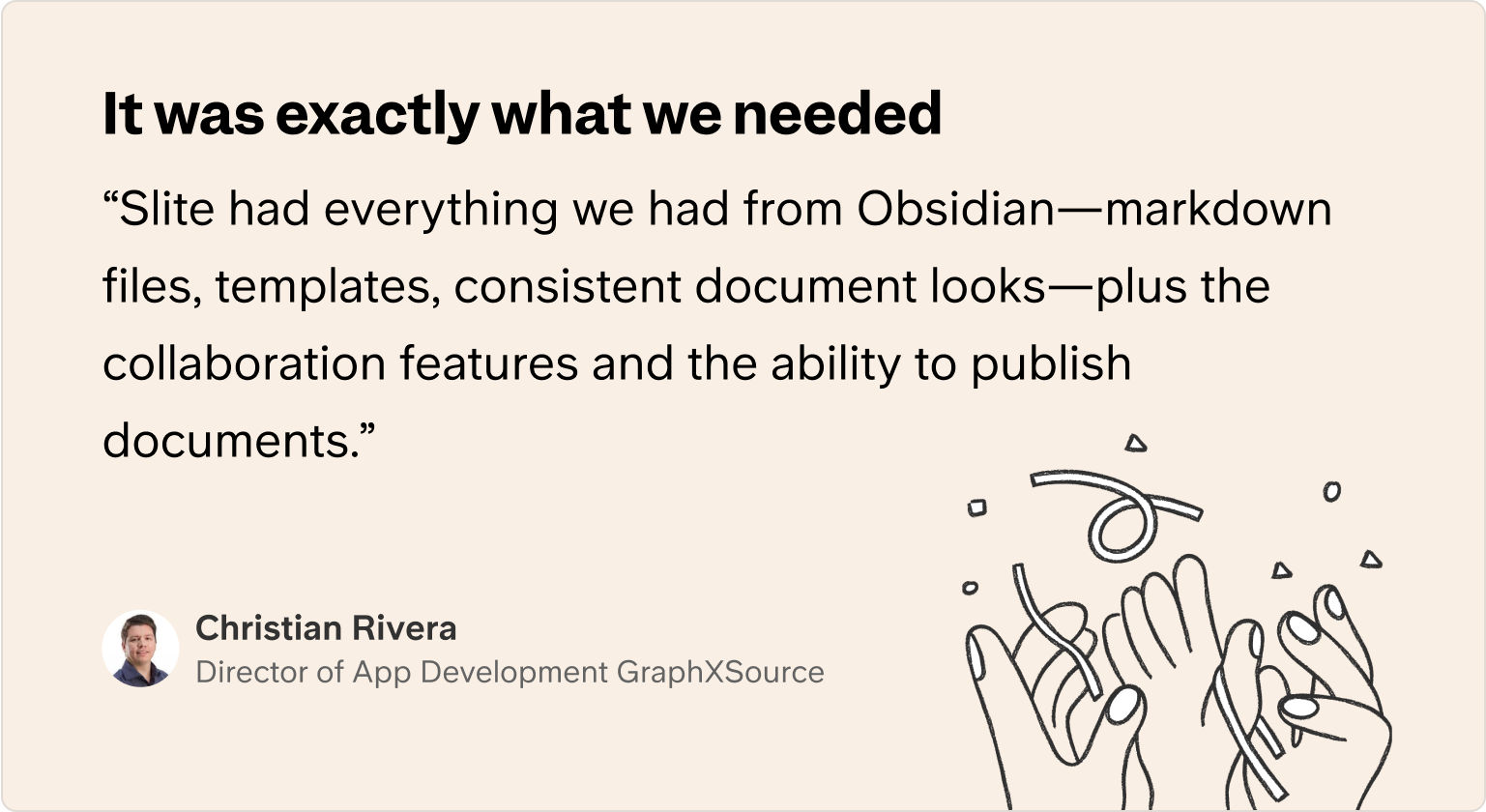
As someone with a UI design background, Christian is particular about user interfaces and usability. Slite immediately stood out because it provided the clean markdown-based structure they loved in Obsidian, but added seamless collaboration and publishing capabilities:
Templates quickly became an unexpected favorite. The team initially hadn't planned on using them, but now templates streamline interviews, team profiles, and detailed image mapping documentation.
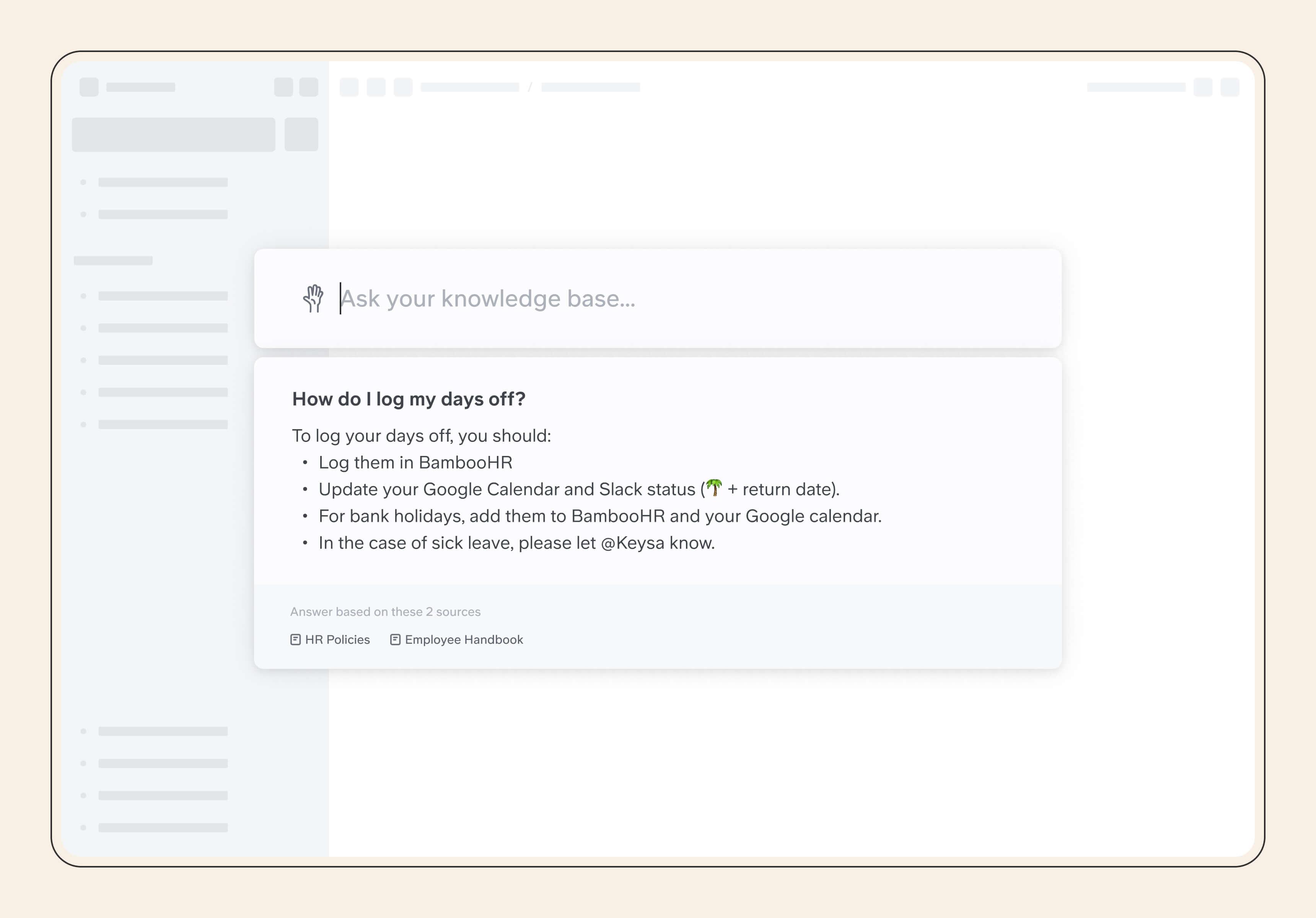
Another standout feature? Slite's Ask AI. With dense SOPs, APIs, and documents packed with visuals, finding specific information could be tedious. Now team members quickly get exactly what they need without scrolling through lengthy documents:
"Ask AI is very useful because people don't always want to read long SOPs or well-documented APIs. Our image mapping team especially loves it—their documents have tons of images and steps, so Ask AI saves a lot of time."
How Slite fits into GraphXSource's workflows
Slite quickly became central to GraphXSource's daily operations, complementing their existing workflow of tools like Airtable for task management, Figma for design, and Gmail for customer interactions.
While initially hesitant about embedding designs directly, Christian anticipates embedding Figma prototypes into Slite once more teams transition fully onto the platform. Airtable tasks now routinely reference Slite documents, keeping project management tidy and accessible.
Real impact: Design sprints made easy
A practical example of Slite's immediate impact came in the team's recent design sprints. During week-long UI/UX sprints, GraphXSource needed a tool robust enough to handle collaborative brainstorming sessions:
"Day one was about brainstorming and understanding user needs, which involved tons of note-taking. We used Slite live with everyone writing simultaneously. At week's end, we leveraged Ask AI for insights," Christian shares.
The result? A streamlined, collaborative process without the friction of scattered notes or complicated document-sharing between remote team members.
An intelligent notebook anyone can talk to
When asked how he'd describe Slite to his grandmother during Christmas dinner, Christian smiles:
"You know your notebook, where you write things to remember? Slite is a digital version of that, but it comes with a personal assistant you can talk to. It's basically an intelligent notebook—one you can have a conversation with.'"
From personal note-taking headaches to a collaborative digital assistant, GraphXSource's switch to Slite has been a smooth, impactful shift.
GraphXSource’s lesson? Some tools don't scale with your team.
GraphXsource's story isn't unique. Many teams start small, relying on tools built primarily for individual productivity. But as teams grow and collaboration becomes essential, these once-effective tools turn into bottlenecks. GraphXsource quickly found Obsidian, great for personal notes, just couldn't keep pace with the demands of global collaboration, document sharing, and real-time teamwork.
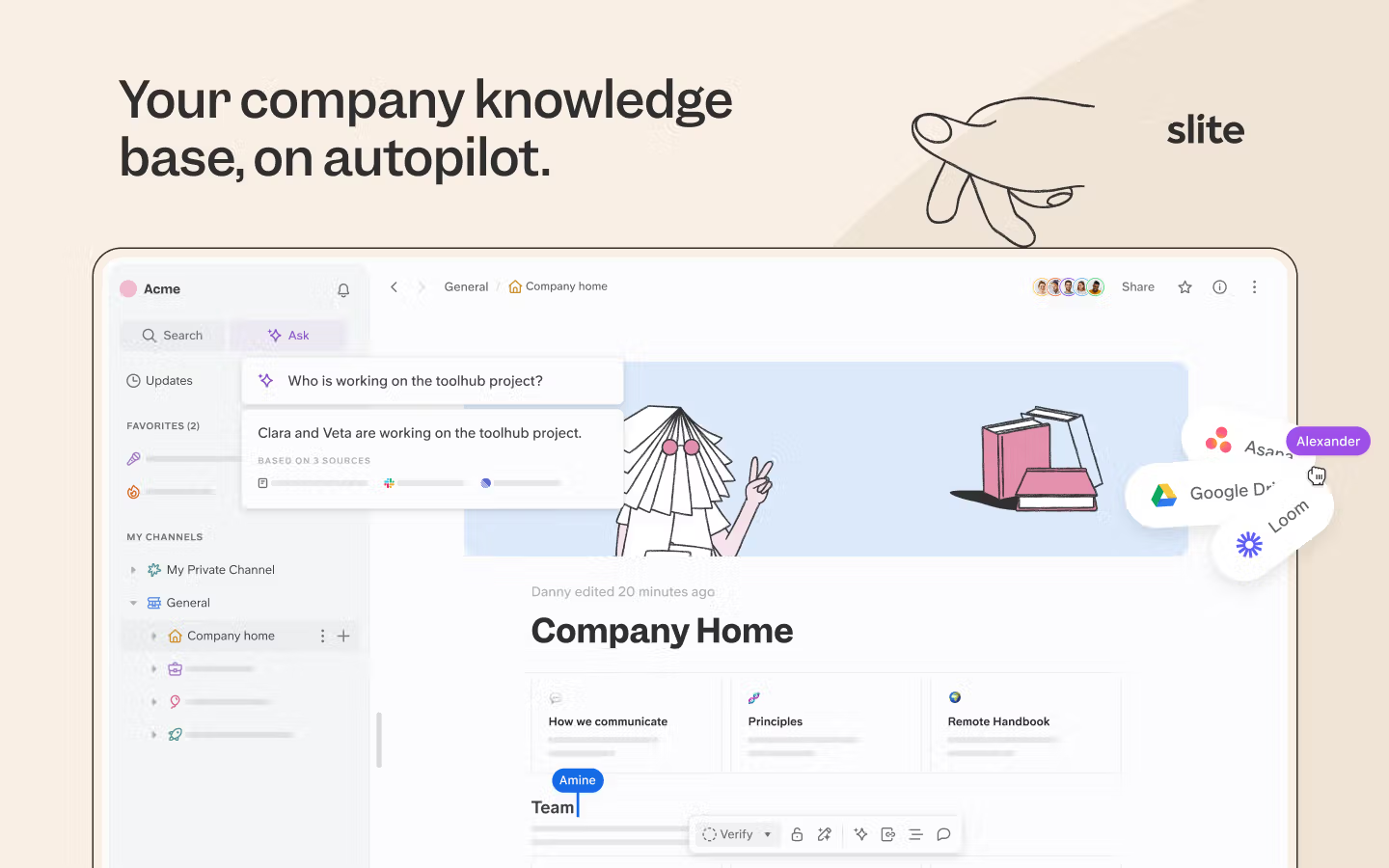
If your team has experienced the frustration of mismatched tools—syncing issues, scattered documents, or complicated workarounds—you're likely in a similar spot. GraphXsource's switch to Slite highlights a common truth: when documentation is easy, people actually use it.
If you're tired of juggling scattered notes, wrestling outdated documentation, or struggling to bring your global team onto the same page, consider GraphXsource's journey. Moving to Slite transformed their entire workflow into something simpler, clearer, and genuinely collaborative.
Ready to make your team of artists play well with each other? Try Slite or talk to us today.