The art of user interviews

User interviews tend to be dry - why else would product managers need to incentivize people with gift cards and cash to do them? But when done well, user interviews are as engaging for the interviewee as they are informative for you. A good user interview tells a story — with the person using your product as the hero, and you as the guide.
Since user interviews happen often, and live (NOT asynchronously), we try to make sure the time is well-spent and results in crisp insights we can later develop into solutions. Here's how we break down the process and set our heroes (customers) up for success.
Steps of the user research process
User interviews are just one part of user research, which itself is part of the overall product development process. A highly structured process for user research is like an action-packed film: it's got a clear arc from beginning to end.
The user research process at Slite looks like this:
- Interview (Generative) - Discover pain points, record and take notes
- Affinity cluster - Group findings into broad themes
- Write Insight statements - What are the the takeaways we want to focus on for our next development cycle?
The above research then sets us up for the development process:
- Ideate - What do we want to build?
- Prototype - Build a low-fi version
- Interview (Evaluative) - Test out the product, record and take notes
- Build - engineering team builds a useable, launchable version of the product or feature.
The two types of user interviews: evaluative and generative
User interviews take place at two key points in the development process: generating ideas and validating what's been built. At both points, the product team needs to talk to people face-to-face. They do so via video call. A bit more detail below:
Generative user research focuses on individuals who fit the ICP (ideal customer profile), but are not customers, and is used to discover:
- Who they are
- What their current problems are, with regards to our company's areas of expertise
- How they currently address those problems (demonstrated via screenshare)
Interviews conducted for generative research purposes tend not to include any product testing or guided tours. The goal is just to get to the root of people's pain points and understand how they think.
💡Tip: For any interview, always stick to a script. Scripts hold you accountable to your goals and areas of focus. They're also a controlled variable that ensures that results are unbiased and easy to analyze.
Evaluative user research focuses both on current users and those within the ICP, with the goal of having people test out the product and evaluate how well it works. It's much less exploratory and more analytical. The questions it answers are often more direct:
- Does this feature work as intended?
- Do people like what we've built?
- What do they dislike?
- What are the gaps? What information are they missing? In what ways does the solution fall short?
💡Tip: Ask users to "think out loud" as they navigate your product. This needs to be clear since the beginning, because you won't get their thinking if you just see them clicking around. They can forget, so it's our job to be guiding their attention and asking specific open questions that can help them communicate their thinking path: "Can you tell me what you see here?", "Can you tell me what are you looking for now?", "What did just happen when you clicked there?"
💡Tip: Set boundaries so the interview doesn't end up being a report of unrelated bugs, or the user asking questions about how to do something. Of course that can happen; in that case, be very polite and say that first we'd like their thoughts on how "x" thing works, and leave those questions for the end of the call. Always leave space at the end of the calls to ask whatever questions they want.
Handy tools for conducting user interviews remotely
When you have to conduct several interviews over a short period of time, you don't want to lose interesting or important details. Some tools we recommend for organizing your user research:
- Grain for recording interviews and generating scripts
- Figjam for taking notes and creating initial affinity clusters
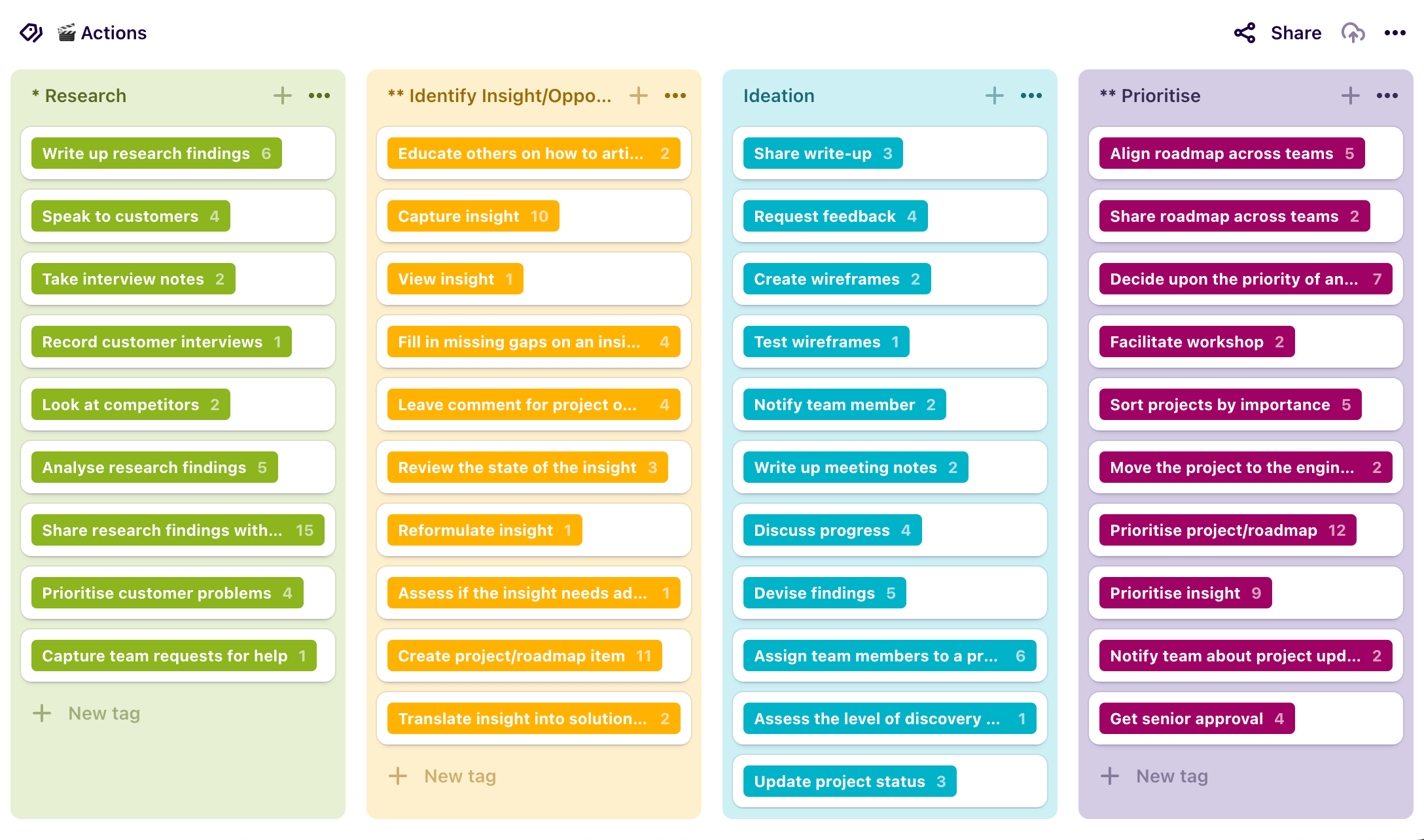
- Dovetail for bringing it all together: creating canvases and Kanban boards based on affinity clusters, key insights, problems, and next steps for potential solutions.
Landing on what matters
Elmore Leonard once said about writing, "When you write, try to leave out all the parts readers skip.” This is true when sharing your findings from user interviews as well.
When your product team presents their findings from user research, you've already landed on what matters: the most urgent problems, and the most elegant solutions. Even though there will be many interesting takeaways from interviews, the useable ones are the ones that ultimately help the customer succeed along the journey from pain point to resolution. They are the heroes of the story after all.

Geschreven door Melanie Broder
Melanie Broder is on the Marketing team at Slite, where she works on all things content. She helps Slite users gain new skills through guides, templates, and videos. She lives in New York City, where she likes to read novels and run loops around Central Park.