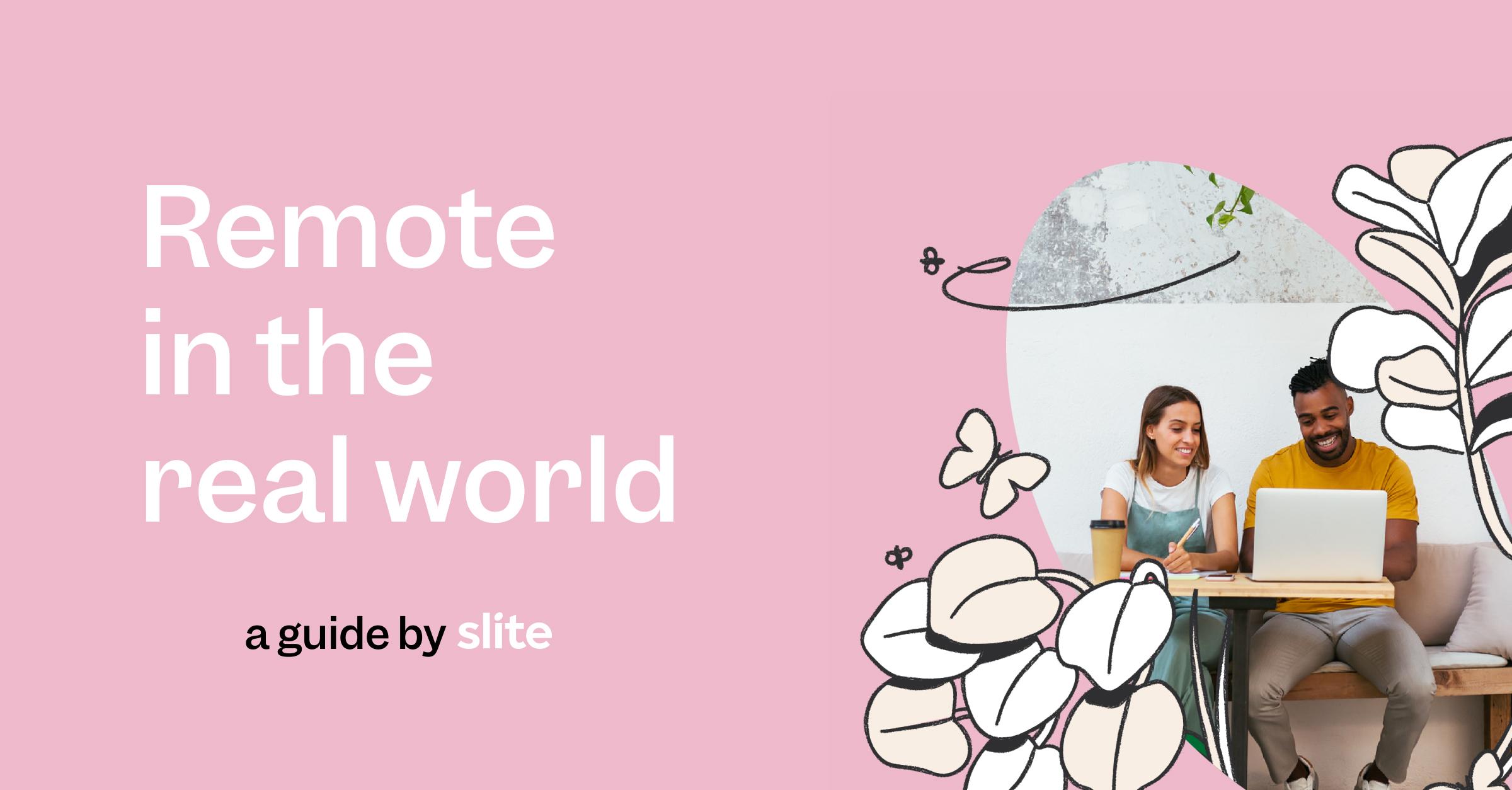
Remote in the real world
Remote work is rarely fully remote. It's more of a balance: between gathering in-person and giving each other space, scheduling meetings and blocking off deep-work time, constant communication and taking action on your own. Between in-sync and async.
That balance is the key to making remote a sustainable way to collaborate as a team. Async may be the ideal, but it’s the compromise between sync and async that makes remote work possible in the real world.
For a while we've been sharing our honest learnings as a remote team on this blog - the strong stances we take, the mistakes we've made, and the insights we've gathered from five years of fully remote work. As we enter a new era for our company and industry, where remote work has become a norm, we've gathered all that knowledge into 8 principles that drive us and remind us of our purpose.
Consider this guide a practical companion on your remote journey - empathetic and honest, while still challenging you to rethink how you build products, form relationships, and communicate in the new world of work.
Table of Contents:
- Remote-first, not remote-only
- Be extremely professional and extremely personal
- Don't delay decisions
- Ship loudly
- Separate reporting from meeting
- Long term vision, short term planning
- You don't have to be a writer
- Customers can't wait
Remote-first, not remote-only
Working remotely doesn't mean you should never see your colleagues, or set foot in an office again. It's a choice, not a demand.
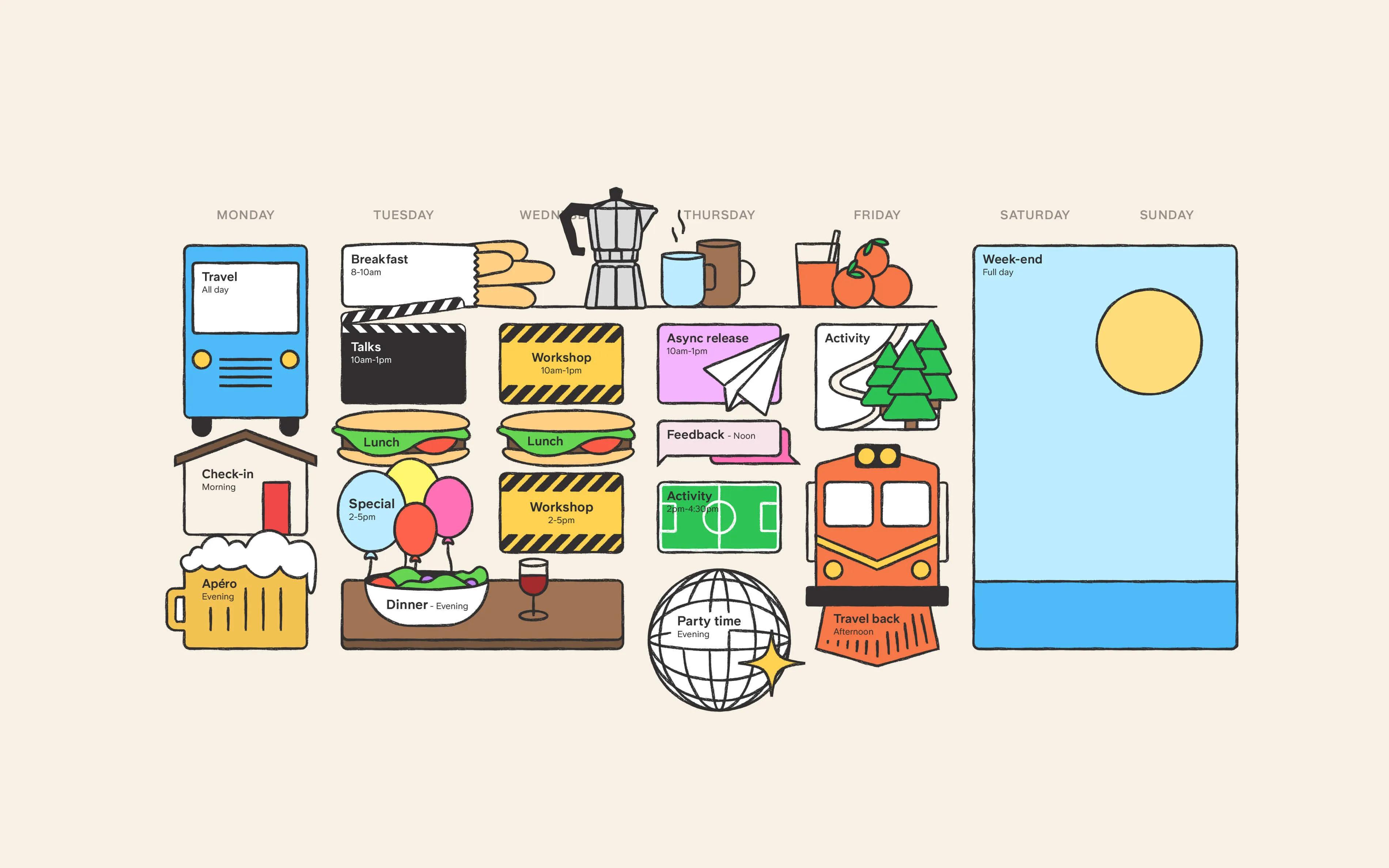
At Slite we gather every 3-6 months for regional and all-hands offsites (called OffSlites). These weeklong gatherings are productive and social. Slite colleagues who live in the same city often cowork together. When out-of-town colleagues visit, they're invited to share space.
Changing your routines and location allows you to shake things up mentally, and being close to teammates can be motivating and fun. Don't let "remote" mean "lonely."
Read more:
The offsite plan for async teams
How to build a change of scenery into your remote workflow
Be extremely professional and extremely personal
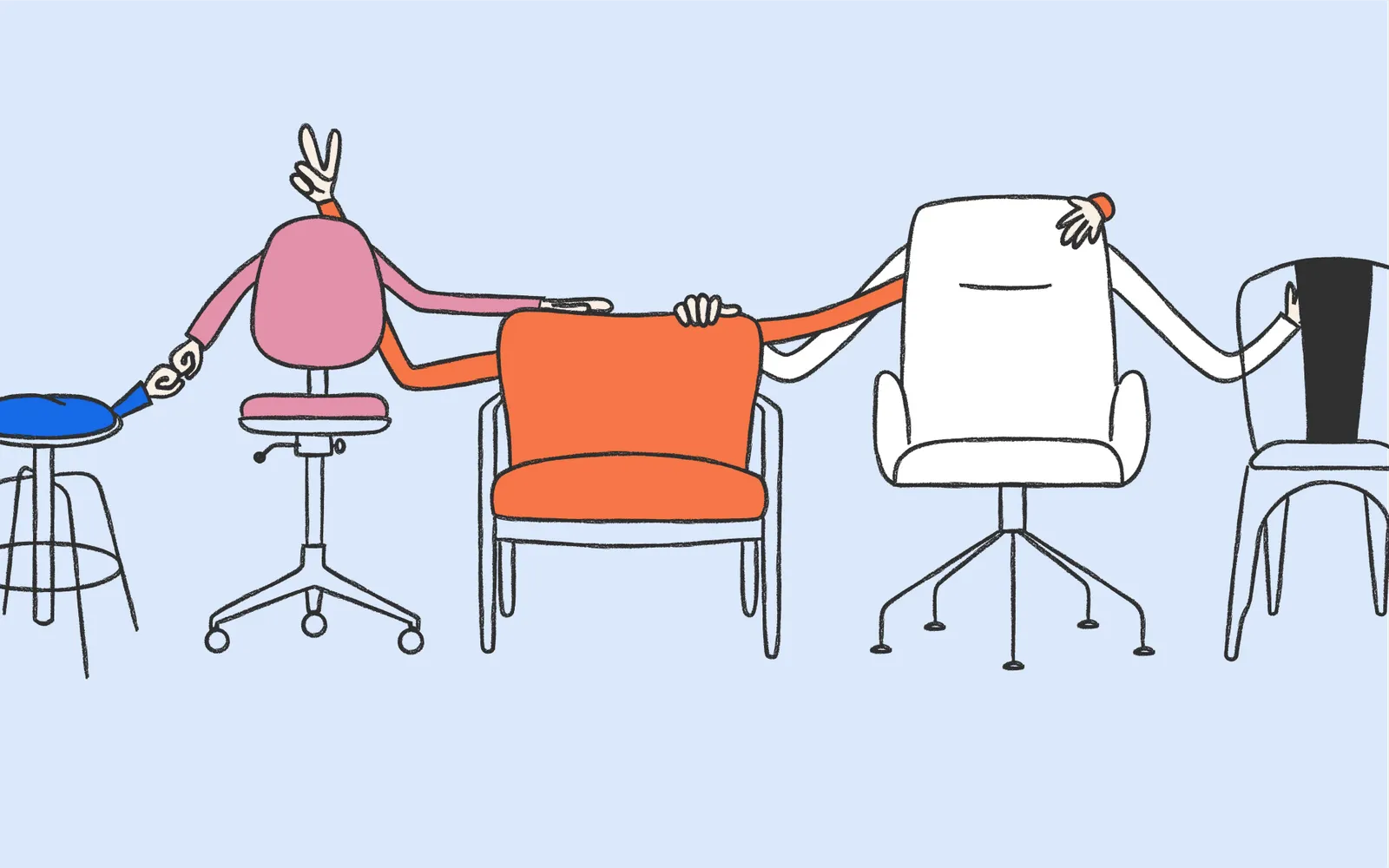
In an office, "work life" and "personal life" blend together - in watercooler chats, meetings, breaks, lunches, and happy hours. In remote, these two sides of life are more discrete. And that's a good thing.
Remote work doesn't signal the end of office friendships - it just asks you to be more intentional about socializing. In an office, socializing is automatic; in remote, undisturbed focus is.
But oddly enough, this focus can lead to the social bonds we all crave. Because when everyone's operating at their best professionally, it engenders mutual respect and admiration. Do great work, make great friends.
Read more:
We're not here to make friends
Don't delay decisions
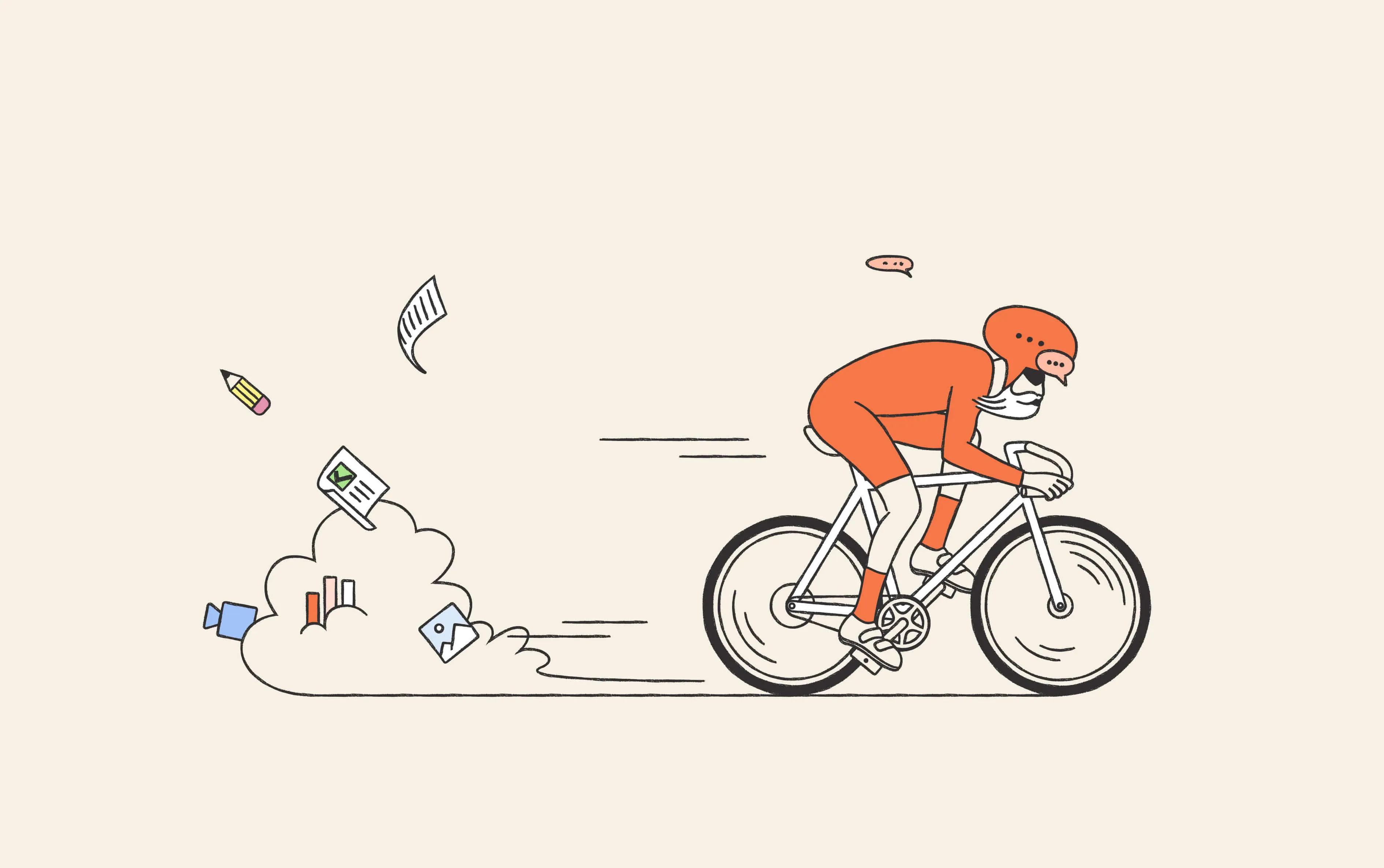
Remote work means you will collaborate with people on different schedules and in different timezones. But you don't need to reach consensus with all of them before making a decision. It's a version of a philosophy long held in the startup world. Call it a "bias for action," "move fast and break things," or "ask forgiveness not permission." Don't let fear of anything - disagreement, failure, being wrong - prevent you from moving forward on a project.
We've developed Slite Discussions with this philosophy in mind. We wanted to facilitate remote communication that ended in action. That's why all Discussions are closed with decisions, and all decisions are documented and stored. We call it "fast async."
Read more:
Check out Slite Discussions >
Chat mindfully
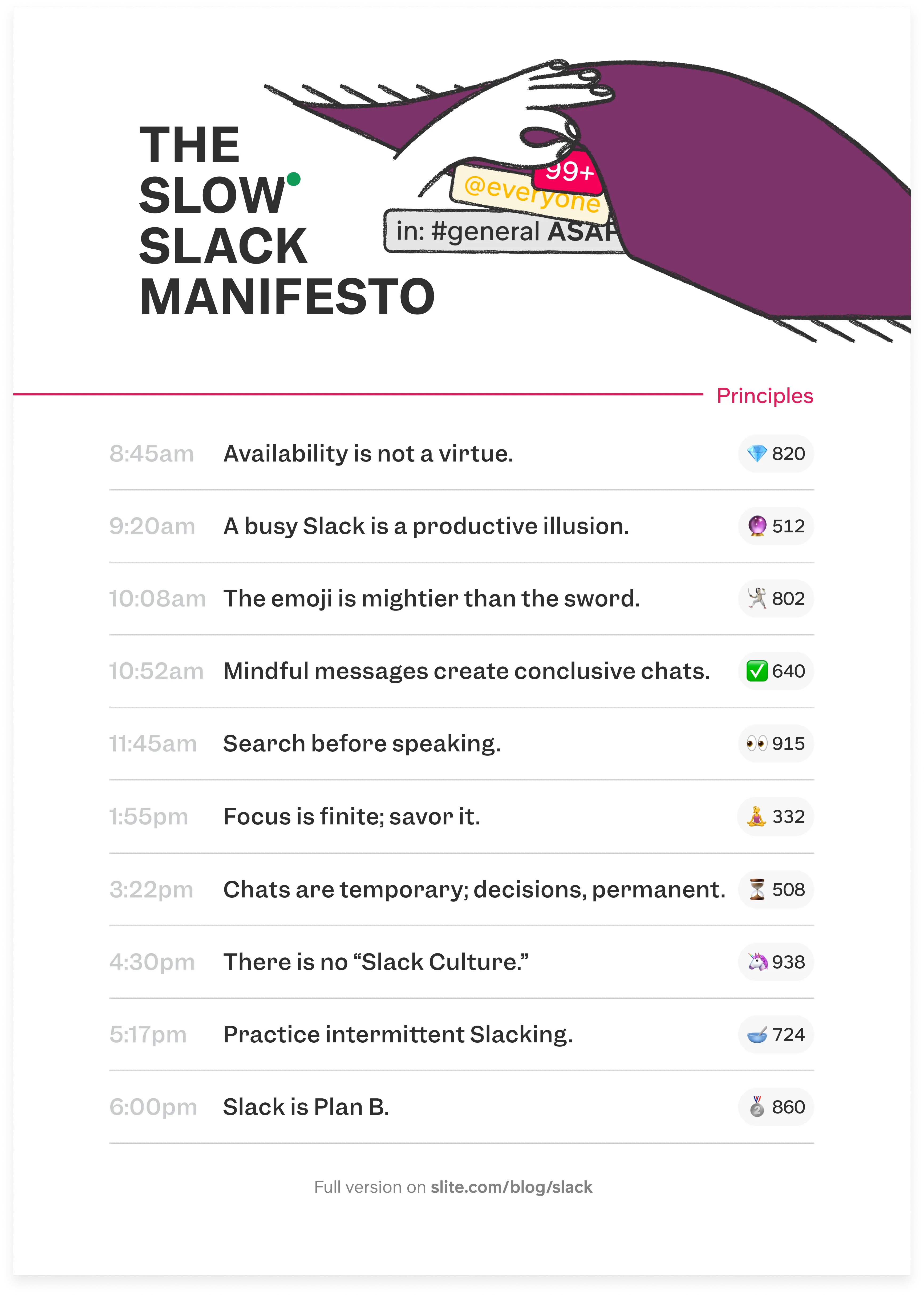
"Chat like a snail, reply like a sloth, win like a tortoise."
Chat apps are unavoidable. But they also encourage an always-on mentality. If you can curb your chat habits, you'll not only be happier, less anxious, and more focused at work.
Instead of real-time reactions and mindless channel-surfing, set designated breaks in the day to read and reply to messages. Save your colleagues' time by not tagging @everyone in a message. And if you can log off, do.
Read more:
Ship loudly

Certain personalities thrive in the independent world of async work. When we first switched to remote, it was the more social squads that suffered most. Our CEO Chris, noted extrovert, really missed the spontaneous interactions of a central office.
But soon we discovered there's a way to cultivate the enthusiasm, motivation, and positivity that we often see as perks of office work: to get loud.
Not literally. We don't want anyone scaring off their kids and pets. Instead, we get loud in our async updates. We have a culture of bragging about what we're working on - and repeating ourselves, and reminding each other, and giving kudos.
In async, you can't assume your high quality work will always speak for itself. Show your pride by getting loud.
Read more:
Async is for more than engineers
Overcommunication is underrated
Separate reporting from meeting
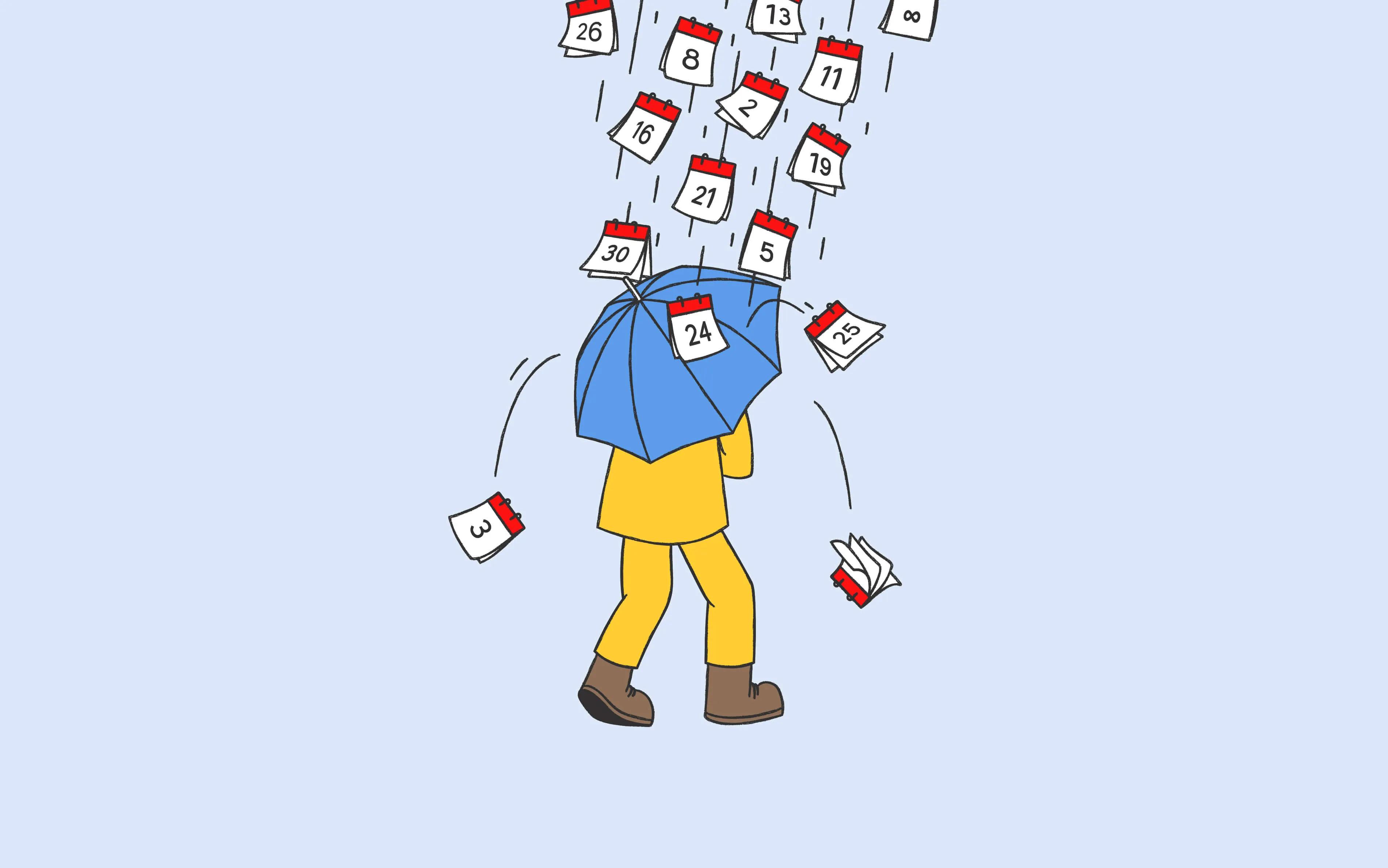
You know those meetings that could have been an email? Working remotely makes that wasted time all the more obvious. Let people catch up on standups, metrics, and other reports on their own time.
Getting rid of those repeat weekly or monthly reporting calls frees up your time for more meaningful, spontaneous meetings. Brainstorming, collaborating, gut checks, and live feedback? So much better than memorized OKRs.
Read more:
It's time to get rid of recurring meetings
Long term vision, short term planning
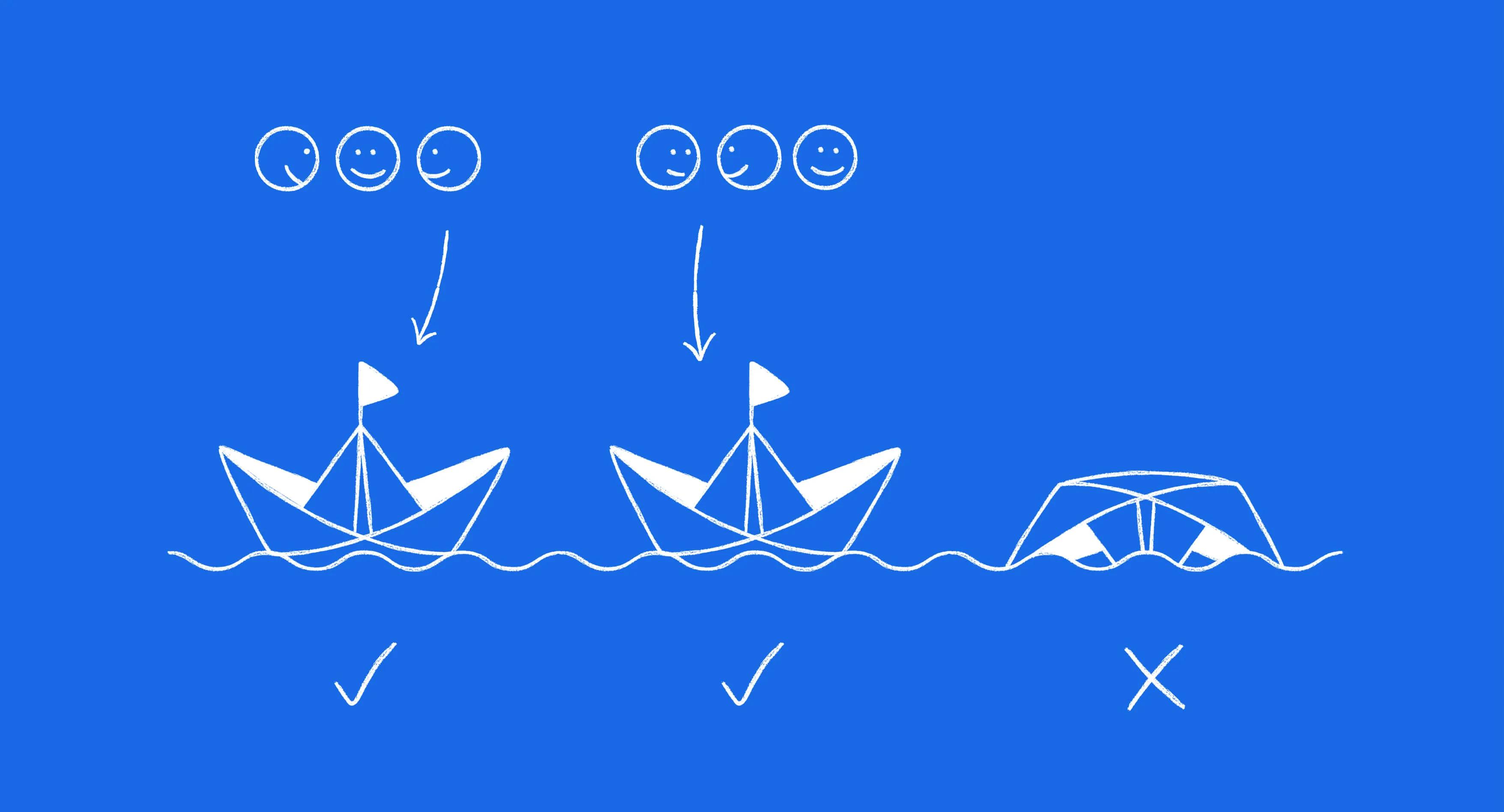
Scrum, sprints, standups...it's all a bit stiff for a remote team. You've hired smart, driven, independent people from around the world. Why burden them with process and oversight when they can just get the work done on their own?
At the same time, you need some kind of plan to move projects forward, especially when it comes to product development.
At Slite we use an adapted version of Basecamp's Shape Up methodology, where we work in cycles of 3 weeks at a time, with one week to regroup. (We used to work in sprints, and then 5-week cycles. 3 weeks is the happy medium, for now.)
When everyone's on board with the vision, your planning can be flexible. Don't be afraid to ditch the roadmap.
Read more:
Why we ditched two-week sprints for a better product development process (Miro blog)
You don't have to be a writer

In remote work, you have to do a lot of writing. But you don't have to be a writer.
That's right: communication is about conveying meaning. Not about crafting literature. So if you need to use bullet points, memes, sketches, Loom videos, voice notes, and emoji to say what you need to say, go right ahead.
While we all wish we were a little more eloquent sometimes, imperfect communication is better than no communication at all.
Read more:
6 Loom ideas for your async team
Voice and video notes are power games within teams
Customers can't wait
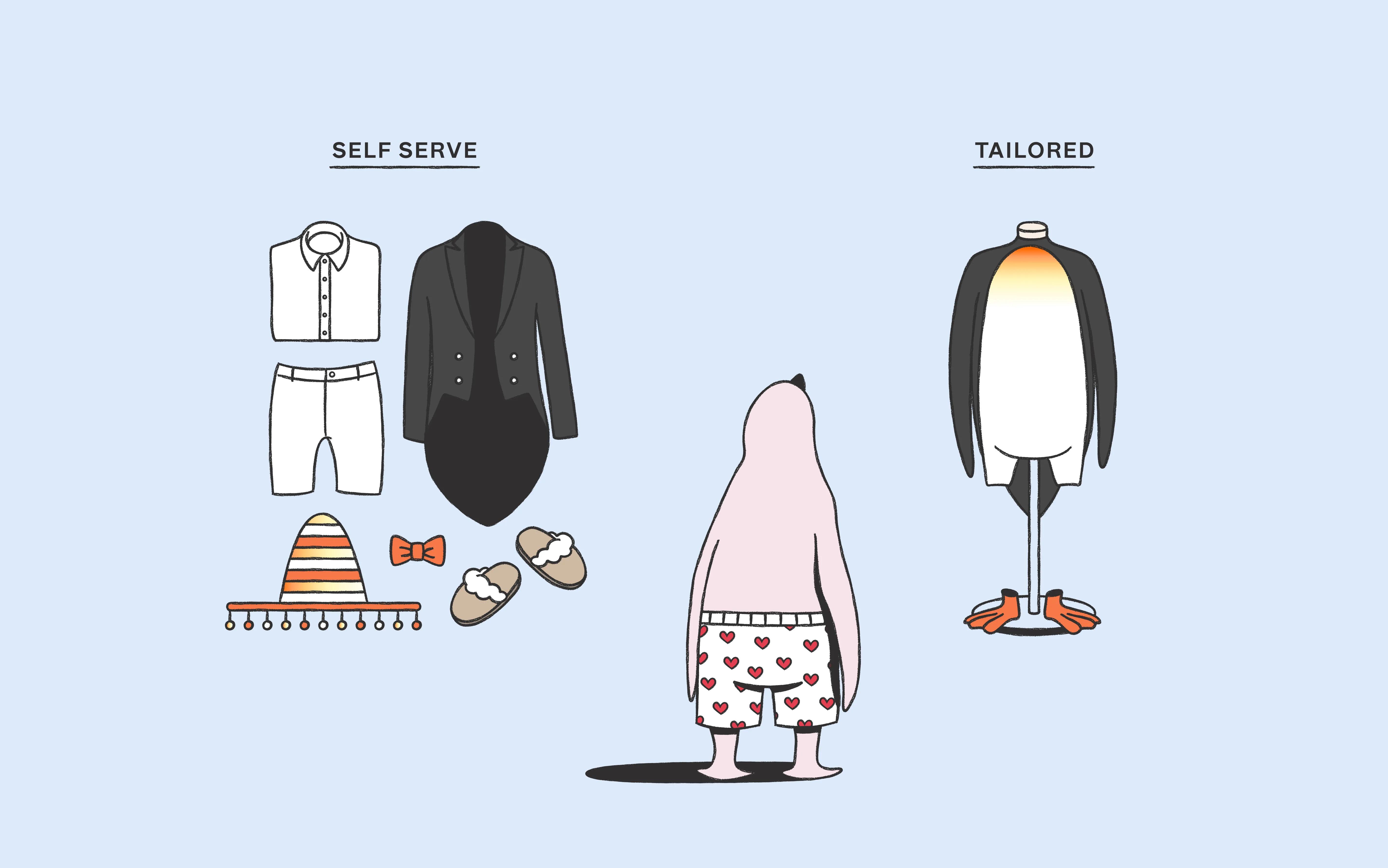
As much as we love asynchronous communication, when it comes to customers and prospective customers, swift replies are ideal.
We've done all-hands support for a while now, and nothing can replace the relief customers feel when they know there's a real human being on the other end of the line, ready to help with their questions and struggles. Their surprise when it's the CEO or CTO jumping in is a bonus. And a personal touch with sales is always helpful, too - when we do 1:1 sales, we provide a tailored onboarding experience for new customers.
Luckily, when you hire across timezones, it's easy to implement 24/7 customer team without insisting your team works 24/7. The added benefit is a team that looks and sounds like the customers they serve.
Read more:
What happened when we turned off self-serve sales for a week
Remote work is a spectrum
Going remote is not always a smooth process. The totally-Zen model of absolute async is an impossibility for most of us, especially those just starting to transition away from office or hybrid work, and even for us who have been at it for a while.
But eventually, we all figure out out to make remote work fit into our lives and adapt to its changes and challenges. Remote work is a spectrum, and wherever you land on it, success is a happier and more balanced team.

Geschreven door Melanie Broder
Melanie Broder is on the Marketing team at Slite, where she works on all things content. She helps Slite users gain new skills through guides, templates, and videos. She lives in New York City, where she likes to read novels and run loops around Central Park.