Document360 used to be the predictable buy for structured documentation: visible pricing, clear help center features, and a product most support teams could understand quickly.
That buying decision is less straightforward in 2026.
At the same time, AI search has become a standard feature across knowledge tools. Teams can now find information faster than ever. The harder problem is keeping documentation accurate as processes, decisions, and workflows change. A fast answer is only useful if the source behind it is still current.
Teams looking at Document360 alternatives are not all solving the same problem.
In this guide, we compare 10 Document360 alternatives, each matched to the problem it solves.
Key takeaways
- Slite is the best alternative for teams that need a trusted knowledge base, AI search, and agentic maintenance across support, operations, and internal workflows. Slite Agent detects when something has changed, drafts an update, and routes it to the right person for review.
- ProProfs Knowledge Base fits support teams, technical writers, and HR leads who want to launch a public help center and a private internal wiki from one account, without relying on developers.
- Fini fits support teams in regulated industries that want an AI agent resolving customer tickets end to end on top of the knowledge base.
- Knowmax fits customer experience teams and enterprises that need guided knowledge for agents and self-service, with AI-powered search, decision trees, and visual guides across chat, voice, email, and field service.
- Zendesk fits teams who need a connected help center, ticketing, customer conversations, and support analytics in one system.
- KnowledgeOwl is a focused, standalone help center for customer and employee documentation, with author-based pricing that doesn't scale with readership.
- ReadMe is the right call when your audience is developers and your docs are API references, changelogs, and interactive portals.
- Bloomfire fits large, analytics-heavy knowledge programs. Pricing is sales-quote-only, same as Document360.
- Nuclino is for small teams that want a clean, fast wiki without governance overhead.
If stale docs are costing your team, Slite keeps knowledge current for your team to use and your agents to act on. See how it works.
What changed at Document360 in 2026?
Document360 in 2026 is a different product from the one your team may have priced out two years ago. It has more AI features, less public pricing transparency, and a clearer fit for teams that need structured customer-facing documentation.
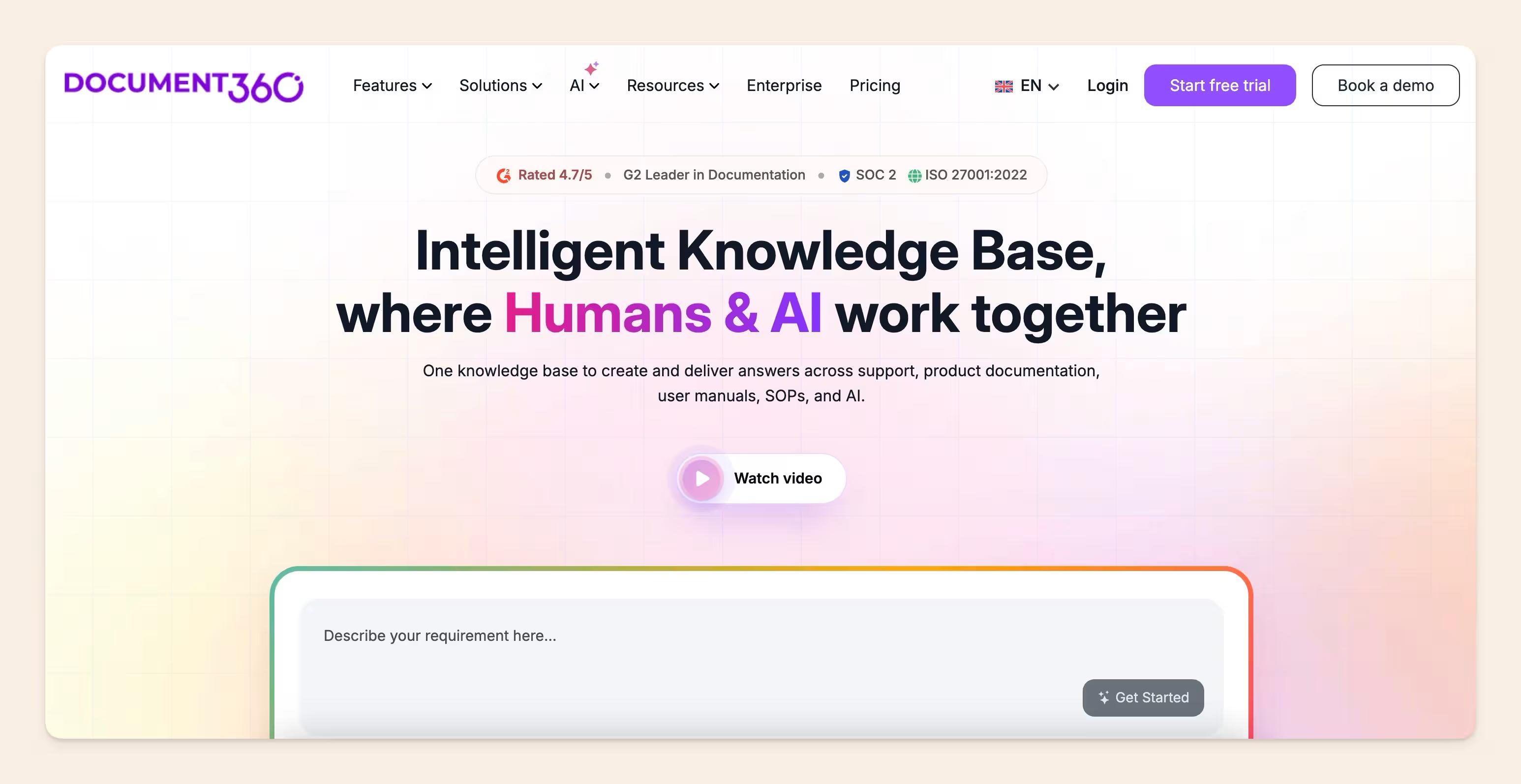
Document360 moved to quote-based pricing in August 2024 and retired its free plan later that year. Pricing is configured per team, based on accounts, workspaces, languages, and AI usage, so the number comes from a sales conversation rather than a pricing page. A 14-day free trial is available.
That model works cleanly if your team runs a read-heavy public knowledge base. Smaller writer teams should scope the quote carefully before committing.
Eddy AI shipped in early 2026, featuring:
- an AI Writing Agent
- AI Search
- an AI Chatbot
- and an MCP server
The AI features seem to be landing well with most users according to reviews.
Which AI features you get depends on the plan you land on. The full suite, including AI search and MCP connectivity, sits in the higher tiers, so it's worth confirming what's included in your quote.
Writing assistance and FAQ generation are available more broadly.
Our criteria for evaluation
We reviewed each Document360 alternative based on what teams usually need from a knowledge base. Four things mattered most:
- Daily driver worthiness: Is the tool simple enough for teams to use every day, or does it need heavy admin work?
- AI readiness: Does the tool help teams prepare knowledge for AI search, AI answers, and agent workflows?
- Standout use case: What is the tool clearly best at: internal knowledge, customer support, developer documentation, searchable knowledge sharing, or lightweight team docs?
- Pricing and buying process: Is pricing transparent, predictable, and easy to compare, or does the team need a sales process before getting a useful number?
Document360 alternatives compared
| Tool | Best for | AI angle | Main tradeoff | Pricing |
|---|---|---|---|---|
| Slite | Self-maintaining knowledge base for support, operations, and internal teams (of humans and AI agents) | AI search, workflows, MCP, verification, and agentic maintenance of stale docs | Not a ticketing-first support suite | Basic starts at $10/user/month. Pro starts at $20/user/month, billed annually |
| ProProfs Knowledge Base | Public help center plus private internal wiki from one account, without needing a developer | AI Writer drafts articles from a topic brief; AI-powered search returns a single synthesized answer | External knowledge base and internal wiki are priced as separate plans | Free for 1 author and up to 25 pages. External KB plans from $49/author/month, billed annually |
| Fini | AI support agent that resolves customer tickets end to end for regulated industries | Retrieval-free AI agent resolves tickets across chat, email, and voice and turns them into draft articles | Enterprise-priced and support-focused, not an internal wiki | Starts at $36K/year. Enterprise is custom |
| Knowmax | Customer experience teams and enterprises that need guided knowledge for agents and self-service | AI-powered search, guided workflows, visual guides, and contextual knowledge delivery | Primarily designed for enterprise customer support and CX use cases rather than general team documentation | Contact the team |
| Tango | Step-by-step process guides, SOPs, and software training | Auto-captures workflows into guides with screenshots and instructions, voice transcription, and Guide Me and Pins on Enterprise | Not a full knowledge base or public help center | Free plan available. Pro starts at $15/month for 3+ users, billed annually |
| Zendesk | Customer support knowledge base and help center automation | AI support workflows and ticket deflection | Can feel heavy for internal docs only | Suite Team starts at $55/agent/month, billed annually |
| KnowledgeOwl | Standalone help center for customers and employees | AI chatbot, semantic search, and AI-assisted authoring | No built-in ticketing or live chat | Starts at $100/month for 1 author and 1 knowledge base. Extra authors $25/month. 30-day free trial |
| ReadMe | Developer and API docs | Developer-focused AI assistance and API documentation workflows | Too technical for general team knowledge | Free plan available. Pro starts at $250/month, billed annually |
| Bloomfire | Searchable knowledge sharing and analytics | AI search, content discovery, tagging, and analytics | Better suited to larger knowledge programs | Custom pricing |
| Nuclino | Lightweight team wiki | Simple AI-assisted documentation | Limited governance and advanced workflows | Free plan available. Paid plans start at $6/user/month, billed annually |
| Stonly | High-volume customer service teams that need knowledge and AI to execute real processes, guide agents, and resolve complex support scenarios reliably | Knowledge Agents that monitor knowledge 24/7, spot gaps, and keep content current, plus integrated AI answers and Agent Copilot | Purpose-built for customer service, not general-purpose internal documentation | Custom pricing available on request at stonly.com |
Slite
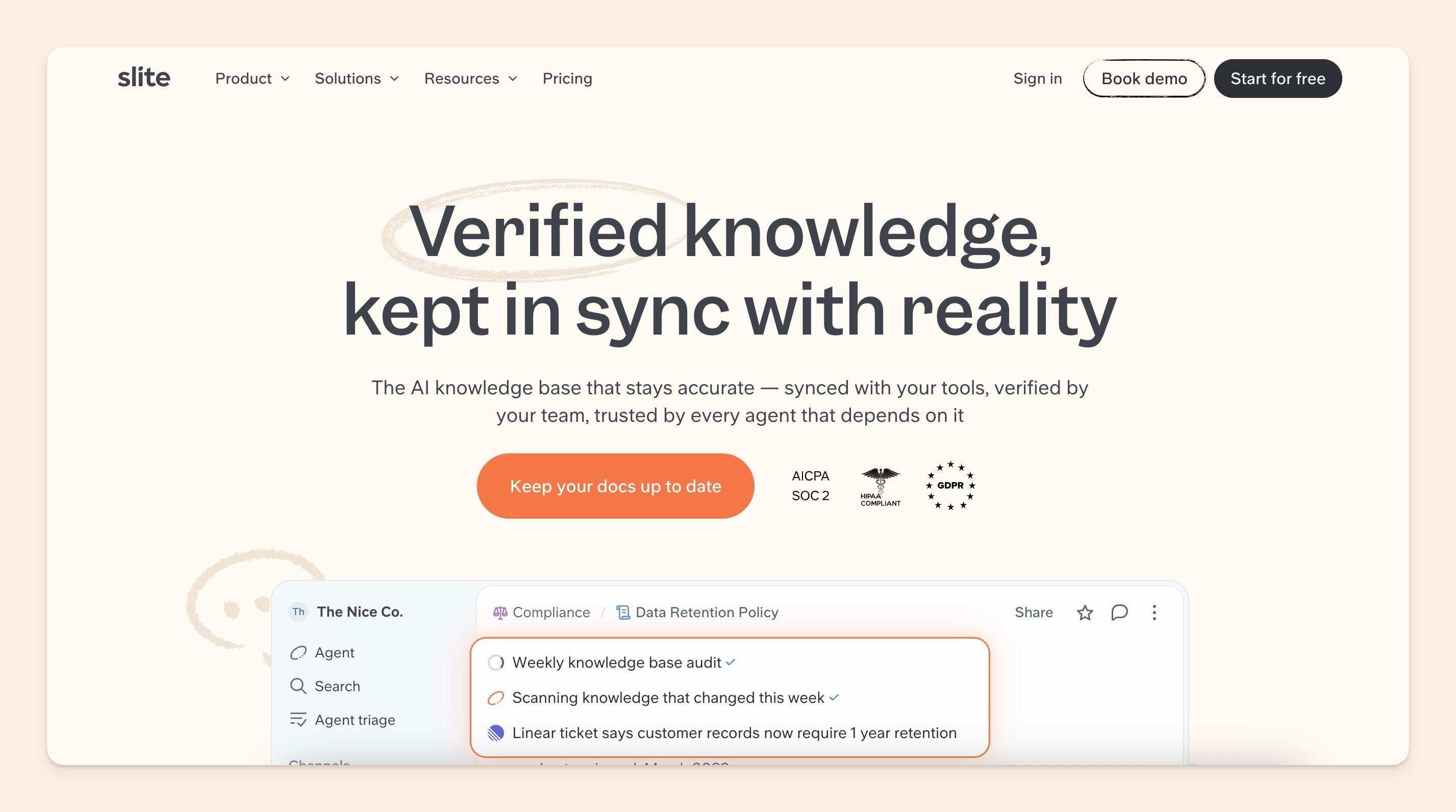
Slite is the first self-maintaining knowledge base that keeps itself current and up-to-date based on information from your company's entire tool stack.
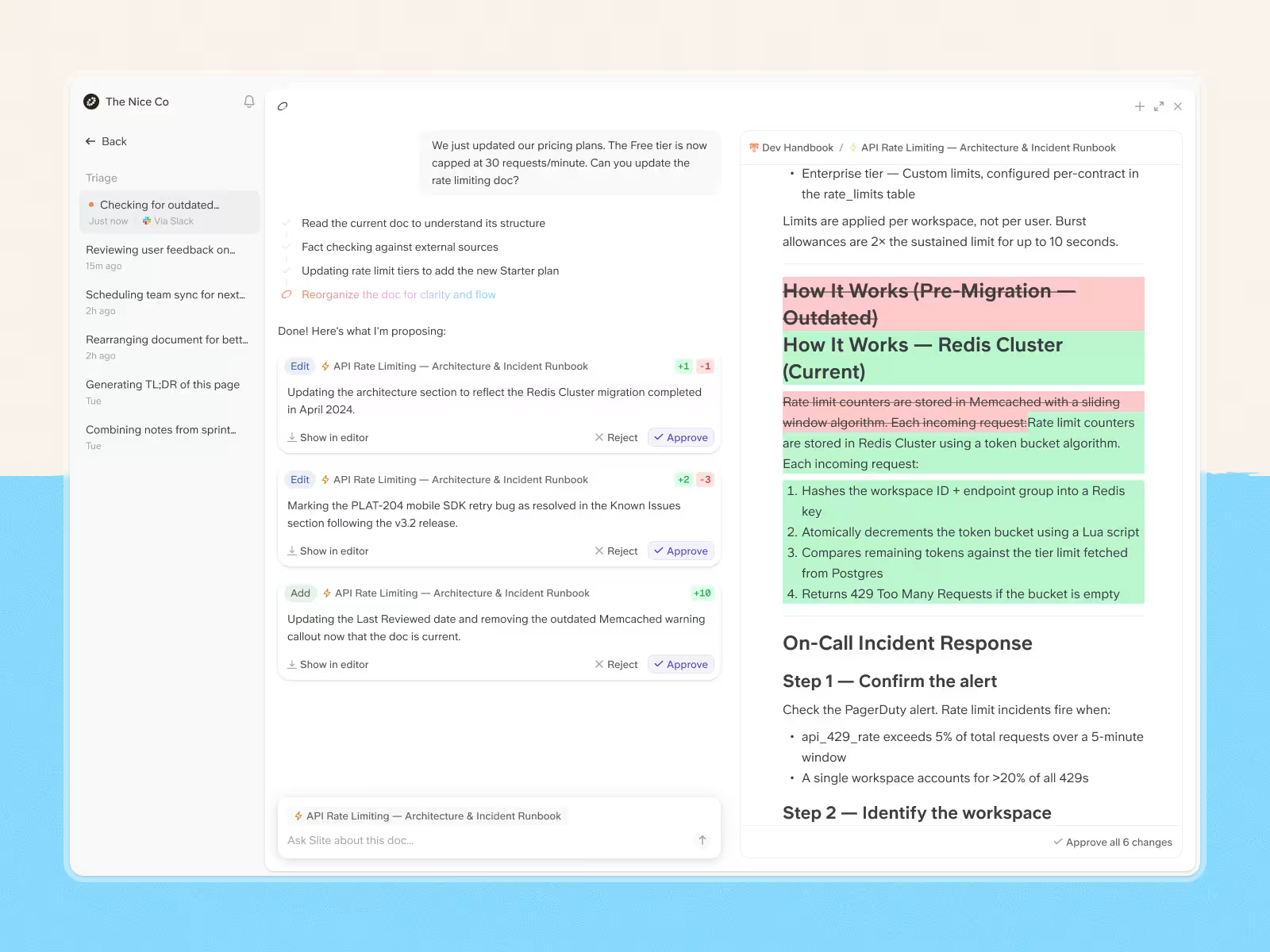
It pairs a structured, verified wiki with the Slite Agent, that detects when documentation has drifted from reality, drafts the correction itself, and routes every change through human approval before it becomes truth.
Slite Agent can detect drift across 20+ connected tools, including Slack, Google Drive, Linear, GitHub, Jira, HubSpot, Attio, Intercom, and Confluence. It is also callable via MCP, API, and a Slack bot.
When activity in those tools suggests a document may no longer reflect how work is actually being done, Slite Agent detects the mismatch, drafts a proposed update, and routes it to the right person for review.
Where Document360 is built primarily for customer-facing help centers and product documentation, Slite is purpose-built for the internal knowledge your team and your AI agents rely on day to day.
Who it's best for
As teams grow, knowledge becomes harder to keep accurate. Slite helps teams maintain a central source of truth for both people and AI agents. It combines AI search with agent-suggested updates, so keeping documentation current doesn't depend entirely on manual reviews.
Pricing
- Basic starts at $10/user/month, billed annually, with a 14-day free trial (no credit card).
- Pro starts at $20/user/month, billed annually.
- Basic includes Ask and document verification.
- Pro adds Slite Agent and AI search across connected tools.
User reviews: G2: 4.6/5
ProProfs Knowledge Base
ProProfs Knowledge Base is built for support teams, technical writers, and HR leads who need structured documentation without relying on developers. The AI Writer drafts full articles from a topic brief, 100+ templates mean you are never starting from scratch, and AI-powered search returns a single synthesized answer instead of a list of links.
You can build a customer help center and an internal wiki from the same account, with conditional content keeping sensitive information restricted to authorized personnel only.
Who it's best for
Support teams, technical writers, and HR leads who want to launch a public help center and a private internal wiki from one account, without needing a developer to set it up.
Pricing
- Free forever for 1 author and up to 25 pages, no credit card required.
- External knowledge base plans start at $49/author/month, scaling to $79/author/month for unlimited sites and pages, billed annually.
- Internal wiki plans start at $0.99/user/month for teams of 50 or more, scaling to $2.99/user/month, billed annually.
- Customer Delight Suite (5 tools in 1) starts at $499/month, annual plans only.
User reviews: G2: 4.6/5
Fini
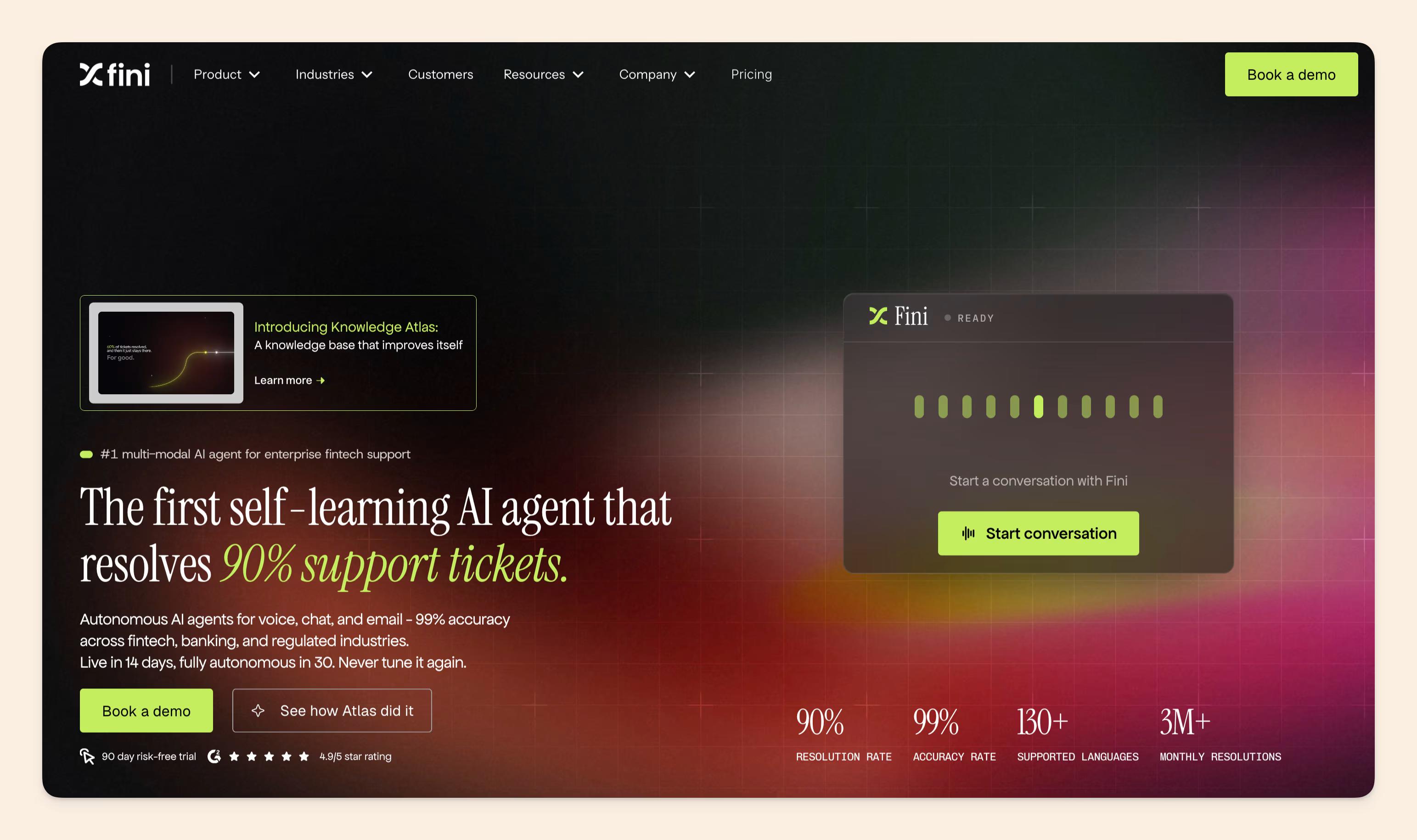
Fini is an accuracy-first AI support agent built for regulated industries: fintech, banking, healthcare, and insurance. Where Document360 helps teams write and structure help content, Fini puts that content to work, resolving customer tickets end to end across chat, email, and voice, then feeding what it learns back into the knowledge base.
That feedback loop is the part most knowledge tools skip. Fini turns resolved tickets into draft help articles, flags content that has gone stale or contradicts another source, and traces every answer back to where it came from. Answers run on a retrieval-free architecture that holds 99% accuracy, and every action passes through configurable guardrails and approval workflows before anything reaches a customer or a backend system.
Fini's published numbers: 90% resolution, live in 14 days, autonomous in 30, and 3M+ tickets resolved monthly across its customer base. Compliance covers SOC 2 Type II, ISO 27001, HIPAA, GDPR, and PCI-DSS, which is why it lands with support teams whose auditors read the vendor list.
Who it's best for
Support teams in regulated industries that need customer-facing resolution and ticket deflection, with a help center that stays current from resolved tickets and human approval on every change that matters.
Pricing
- Starts at $36K/year; Enterprise is custom.
- 90-day free trial for Enterprise customers.
- Enterprise Guarantee: 90% resolution in 90 days or money-back.
- Every tier includes the platform, implementation, and a monthly resolution allowance.
User reviews: G2: 4.9/5
Knowmax
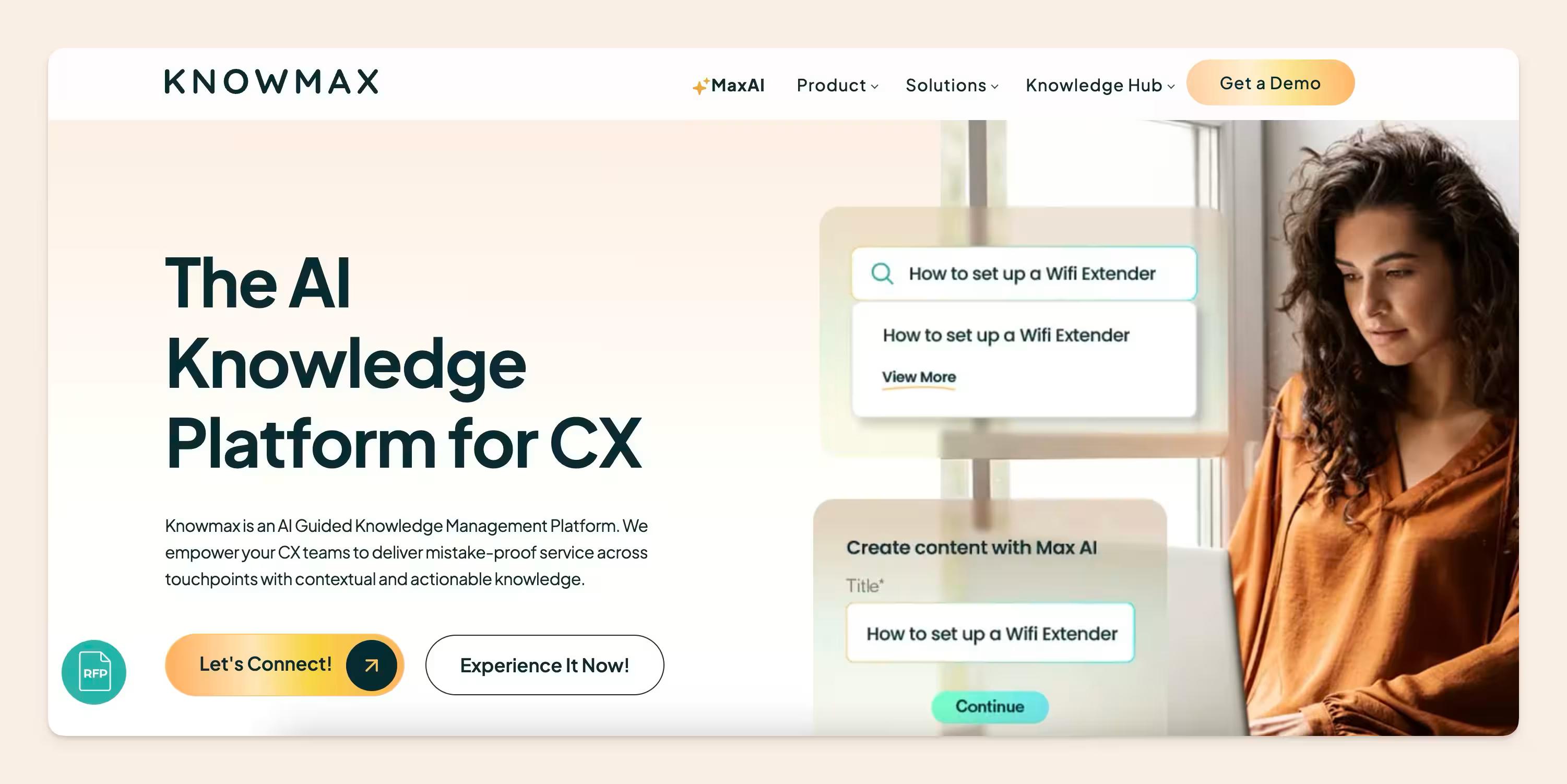
Knowmax is an AI-powered knowledge management platform built for customer support teams and enterprises. It helps organizations create a single source of truth using knowledge bases, decision trees, visual guides, FAQs, and AI-powered search. Instead of simply storing documents, Knowmax helps agents and customers find the right answers quickly, improving First Contact Resolution (FCR), reducing Average Handle Time (AHT), speeding up agent onboarding, and delivering consistent support across chat, voice, email, self-service, and field service.
Who it's best for
Customer experience teams, contact centers, and enterprises that want to deliver faster, more consistent support with AI-powered knowledge management.
Pricing
- Custom pricing.
User reviews: G2: 4.6/5
Tango
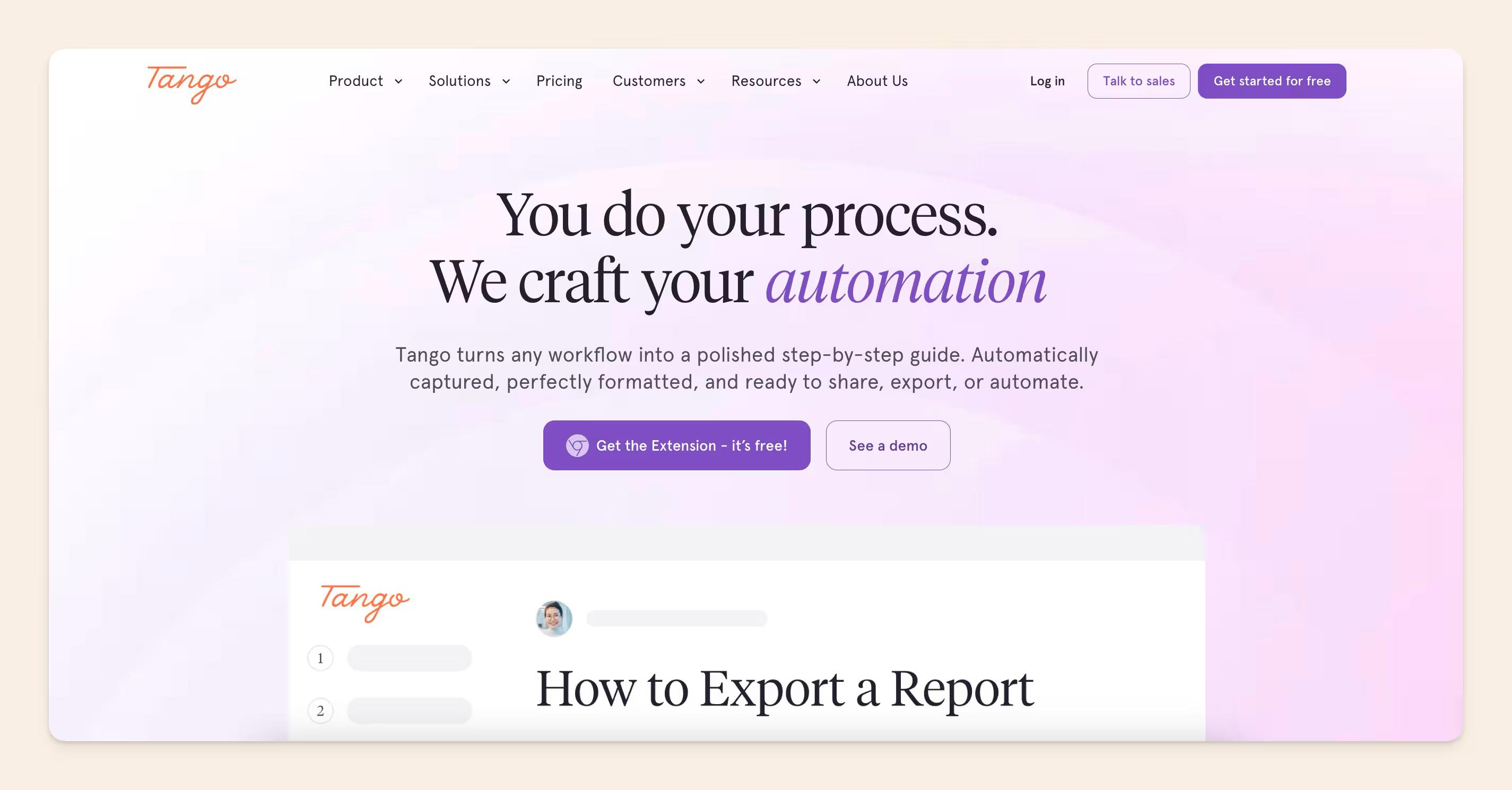
Tango is a workflow documentation tool for teams that need step-by-step guides without writing them by hand. You turn on the browser extension or desktop app, click through a process once, and Tango captures each step with a screenshot and a written instruction.
It covers a different job than the other tools on this list. Tango is built for how-to content such as SOPs, onboarding walkthroughs, and software training, which you can share as a link or PDF or embed inside another tool. It isn't a full knowledge base with a public help center, so many teams run it next to one.
Voice transcription, annotation tools, and branded exports help you polish each guide. On the Enterprise plan, Guide Me walkthroughs and Pins show people the right steps inside the apps they already use.
Who it's best for
Tango is the best option on this list for teams that mostly need process documentation and training guides, such as IT, operations, and customer success teams documenting how to use software.
Pricing
- Free plan available for up to 5 shared workflows.
- Pro starts at $15/month for teams of 3 or more, billed annually. Teams of 1 to 2 pay $22/month.
- Monthly billing is available at a higher rate.
- Enterprise is custom priced and adds SSO, PII detection, and Guide Me walkthroughs.
User reviews: G2: 4.7/5
Zendesk
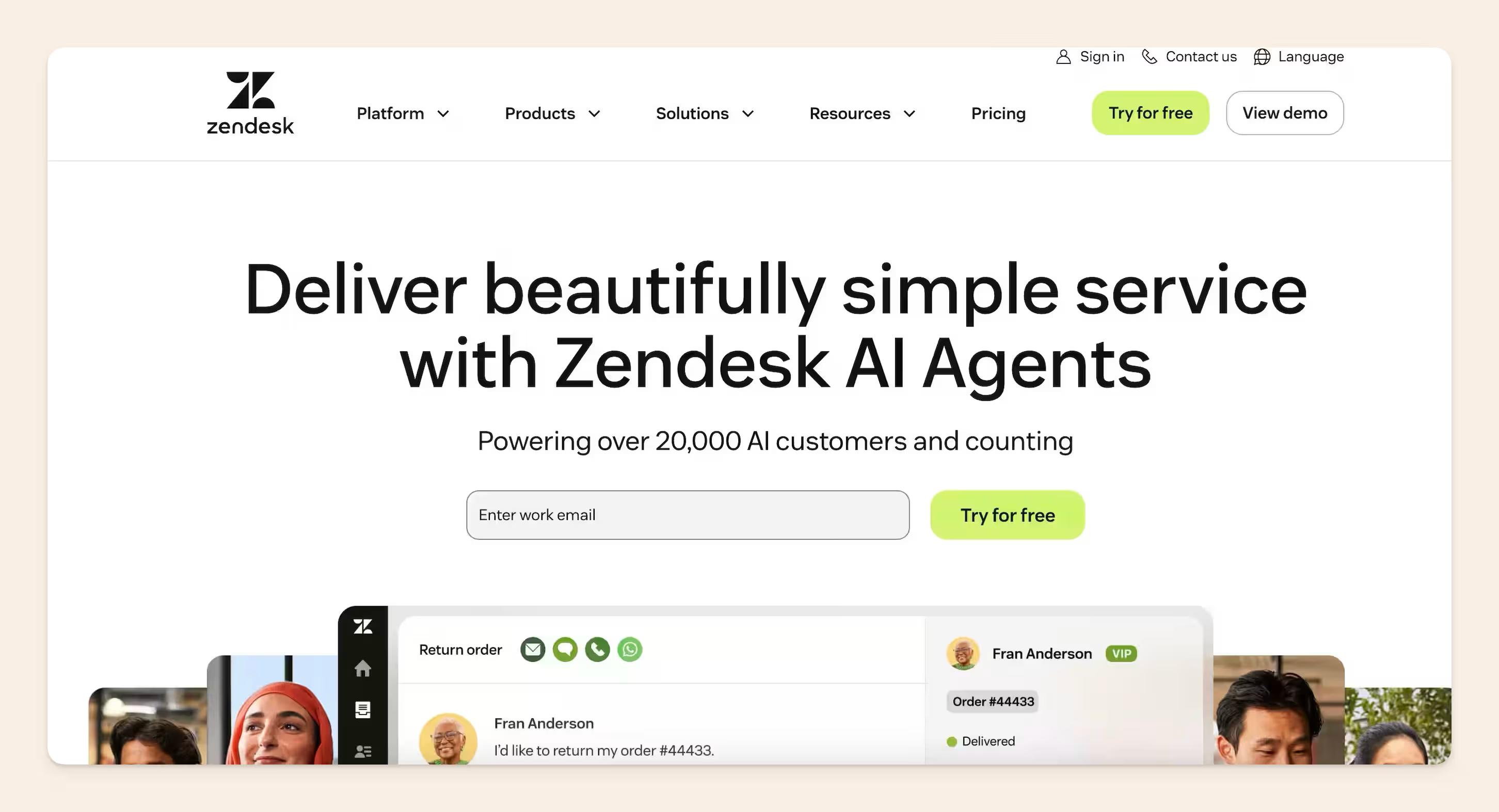
If your team already runs support on Zendesk and wants help center content, ticketing, customer conversations, and support analytics in one system, Zendesk is the right call.
Slite users get a bonus here: the Slite Chrome Extension can surface answers from connected sources directly inside Zendesk, helping support teams find information without leaving the ticket.
That means agents can access knowledge from across their workspace while staying inside the support workflow.
Zendesk Guide works best alongside a support workflow. It covers ticketing integration, support analytics, AI-powered ticket deflection, and customer self-service workflows all in one place.
Who it's best for
If you already use Zendesk, or a strong support workflow is your team's priority, Zendesk is the right call.
Pricing
- Suite Team starts at $55/agent/month, billed annually.
- Zendesk Guide is included in Zendesk Suite plans.
- There is no standalone public pricing path for Zendesk Guide.
- Best treated as a support-suite option, not a lightweight internal wiki.
User reviews: G2: 4.3/5
KnowledgeOwl
KnowledgeOwl is a cloud-based knowledge base built for teams that want to create, organize, and publish documentation for customers, employees, or both, without technical setup or self-hosting. Where Document360 has moved toward sales-quote pricing and an ever-larger feature stack, KnowledgeOwl stays focused on the core knowledge base workflow and keeps its pricing public.
It's built and maintained by a team focused specifically on knowledge management, rather than bolting on adjacent tools. That focus shows up in the day to day: an intuitive WYSIWYG editor with full HTML, CSS, and JavaScript control, keyword and semantic search on by default, public and private portals, and an embeddable widget that surfaces articles directly inside your product or app.
The AI layer adds a closed-system chatbot trained only on your content, plus AI-assisted authoring for drafts, meta descriptions, and style-guide checks. There's no built-in ticketing or live chat, but native integrations (Slack, Zapier, Zendesk, and more) and an open REST API connect it to whatever help desk or chat tools you already run.
What really sets it apart is the pricing model: you pay by the number of authors, not readers, so unlimited readers (including those behind a login) are included on every plan. Content migration, onboarding calls, and custom branded theme setup are bundled at no extra cost, so you launch without doing the migration and design work yourself.
Who it's best for
KnowledgeOwl is a strong pick for teams that want a focused, easy-to-manage help center for customers, employees, or both, backed by hands-on human support, with pricing that doesn't climb as your audience grows.
Pricing
- Starts at $100/month for one author and one knowledge base.
- Additional authors are $25/month; additional knowledge bases are $50/month.
- Annual commitments include a discount, and purpose-driven organizations get 25% off.
- 30-day free trial, no credit card required.
User reviews: G2: 4.6/5
ReadMe
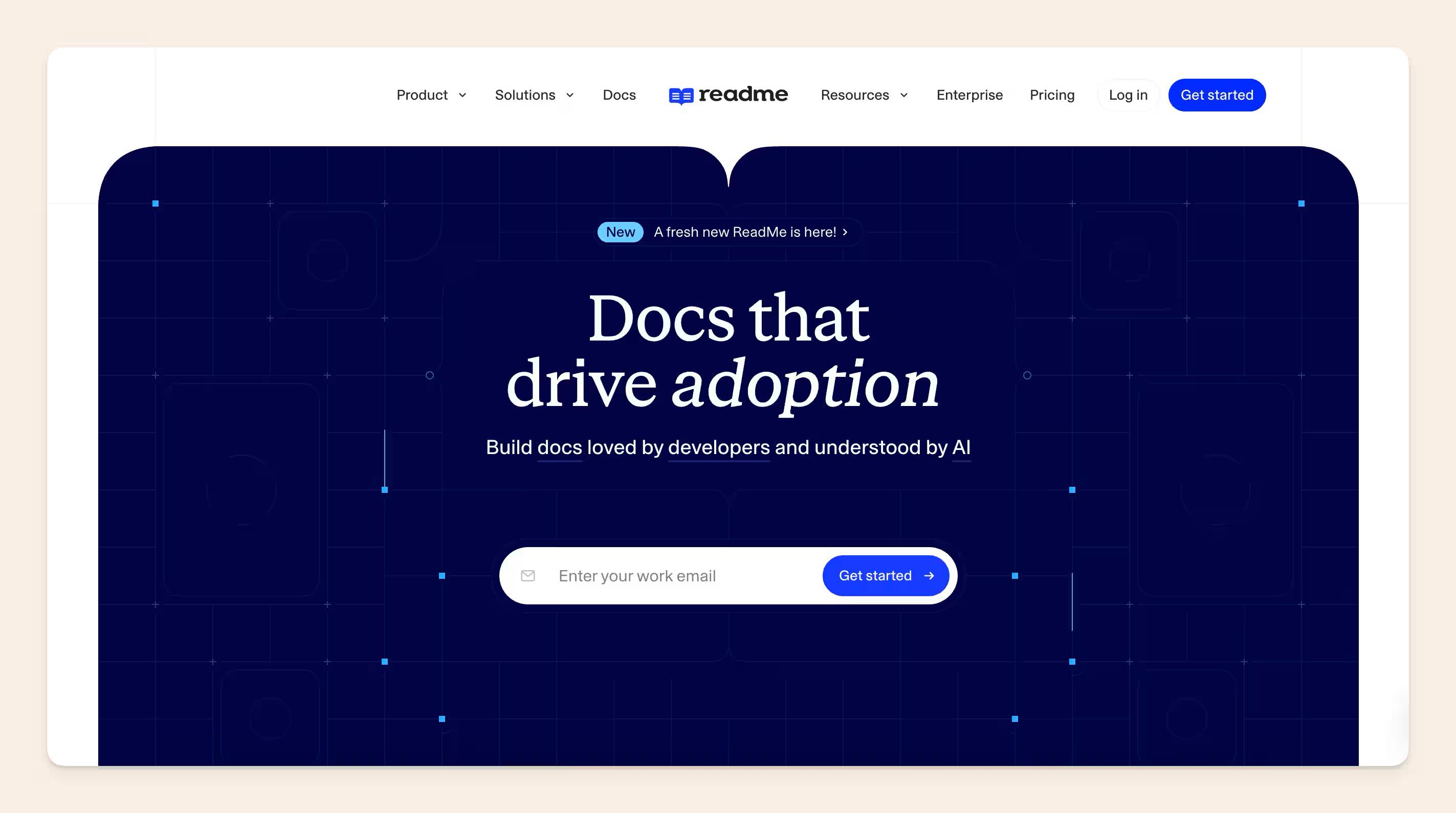
ReadMe is built for one thing: API documentation. If your docs are for engineers and your content includes interactive references, changelogs, and developer portals, it's a genuinely different product from anything else on this list.
It comes with an AI suite called Owlbert, which includes a writing assistant with style-guide auditing and Ask AI search. Agent Owlbert is included on the Pro plan and above.
Your teammates can test API calls right inside the docs using built-in consoles. You get developer portals, changelogs, release notes, and onboarding flows all in one place.
If you're moving away from Document360 and your real need is a reliable developer-facing documentation layer, ReadMe is the right choice.
Who it's best for
ReadMe is the best developer documentation tool on this list.
Pricing
- Free plan available for one project and one admin.
- Pro starts at $250/month, billed annually.
- Enterprise starts at $3,000/month, billed annually.
- Ask AI is a paid add-on.
User reviews: G2: 4.5/5
Related: Technical documentation in 2026: built for humans and AI
Bloomfire
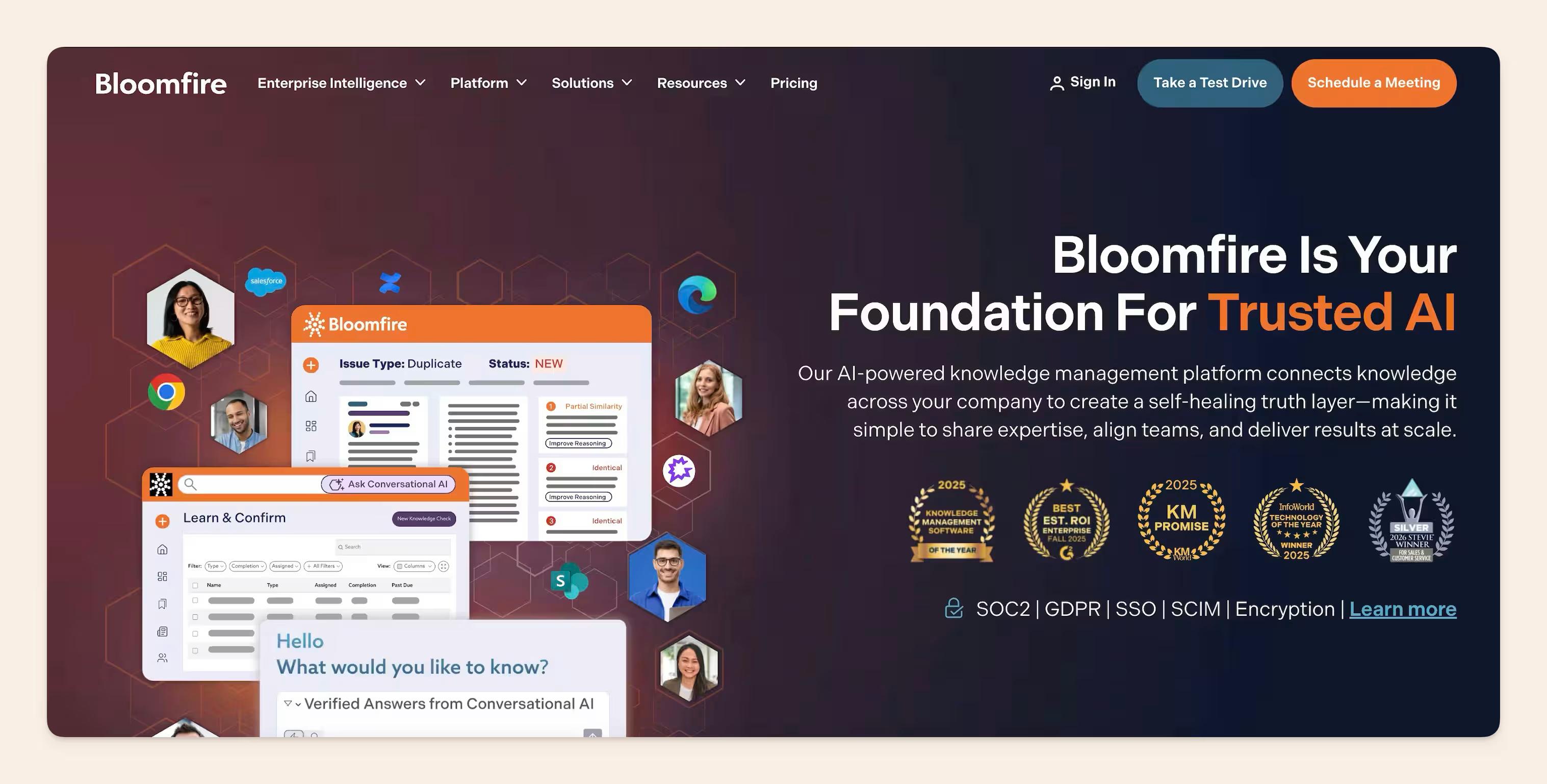
Bloomfire is built for knowledge programs in large teams, research orgs, and companies where knowledge discovery and reporting are central to daily operations.
It runs AI-powered search across a large, messy knowledge library. You can organize content, tag it, and run Q&A knowledge sharing across your team. You also get employee feedback loops and analytics showing how your knowledge base is actually being used.
Bloomfire offers a self-healing knowledge base use case; however, it only flags outdated content and stops there. It doesn't prepare fixes or route changes the way Slite Agent does.
Who it's best for
Go for Bloomfire if you run a large, analytics-driven knowledge program and need searchability and reporting at the center.
Pricing
- No public pricing available.
- Pricing is quote-based.
- Teams need to contact sales for details on the current plan.
- Best treated as a sales-led option for larger knowledge programs.
User reviews: G2: 4.6/5
Nuclino
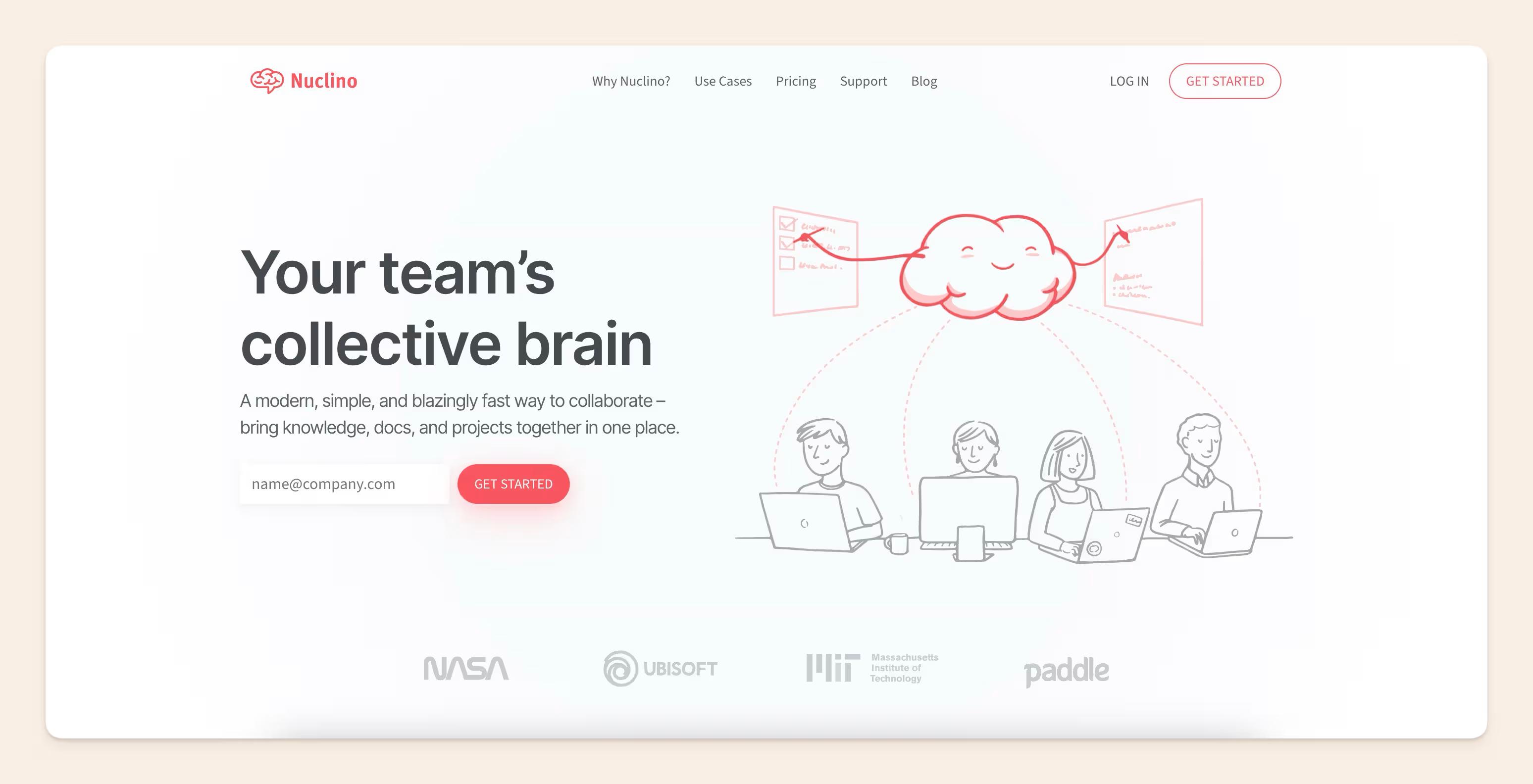
Nuclino is easy to get into. You can set it up quickly, the learning curve is nearly flat, and there's barely any admin overhead. If your team is small and wants a wiki that feels like a notes app, this is it.
Real-time editing, a clean workspace structure, a visual graph view, and a kanban board are all included out of the box.
Sidekick AI is bundled into the Business plan and handles drafting, summarization, and image generation. User data stays out of the training pipeline, which is essential for teams handling sensitive internal content.
Pricing
- Free plan with basic wiki features available.
- Paid plans start at $6/user/month, billed annually.
- Business plan starts at $10/user/month, billed annually.
- Monthly billing is available at a higher rate.
Worth knowing: all users count as billable seats on paid plans, including guests and read-only members.
Who it's best for
Nuclino is the best lightweight wiki on this list for small teams. It starts to feel limited once teams need stronger permissions, workflows, analytics, and admin controls.
User reviews: G2: 4.7/5
Stonly
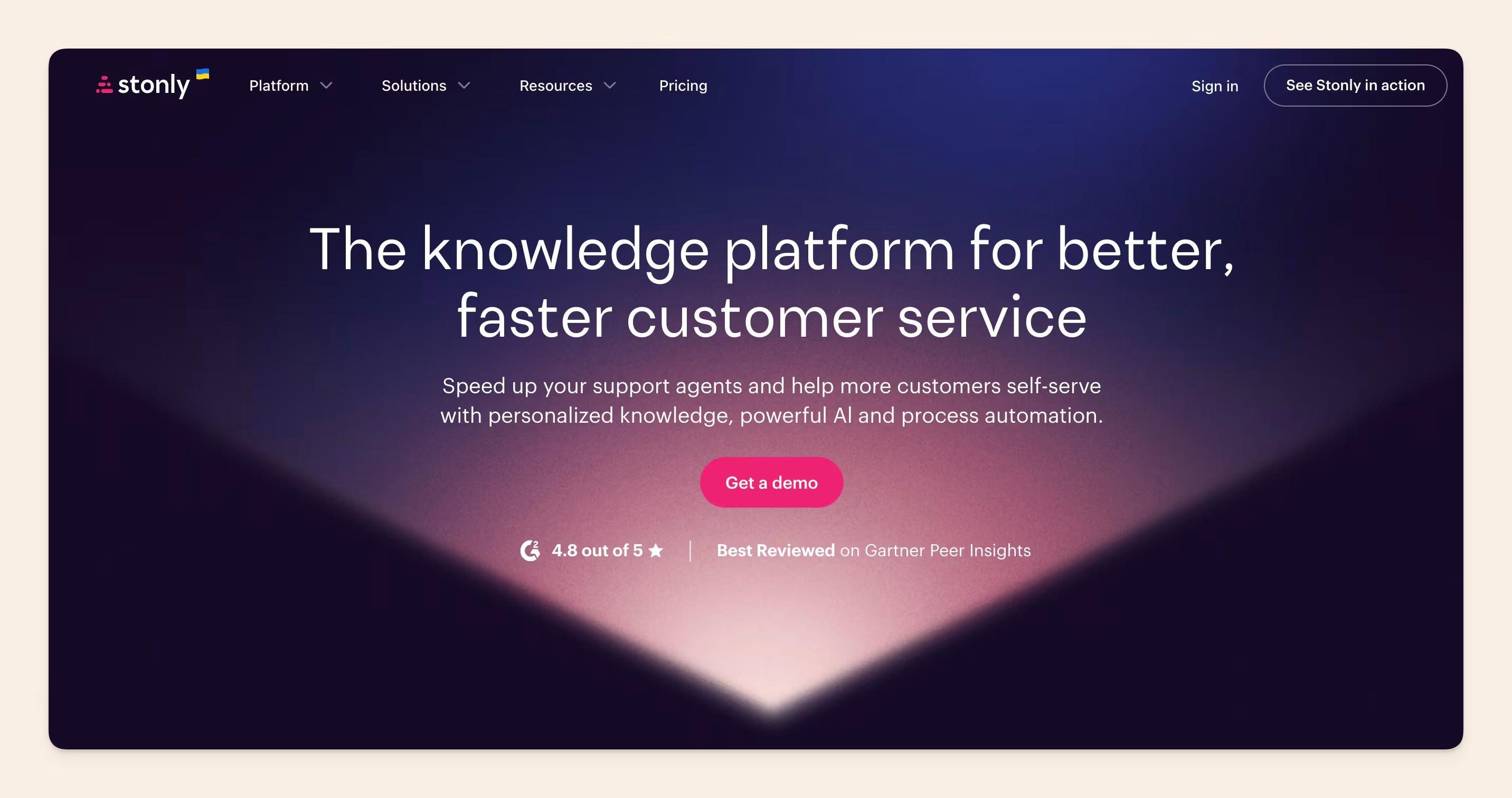
Stonly is built for high-volume customer service teams that need knowledge and AI to do more than store and retrieve information. Where most knowledge platforms stop at articles and search, Stonly lets teams build both standard articles and interactive step-by-step guides that adapt to each user's situation based on context, inputs, and choices. For agents, direct integrations inside the ticketing system surface the right knowledge for each ticket automatically. For customers, no-code triggers and integrated AI answers deliver help at the point of need.
Keeping knowledge current is where Knowledge Agents come in. These are AI agents that monitor your knowledge sources around the clock, spot gaps and opportunities for improvement, and help teams continuously create and update content so the knowledge layer stays aligned with reality over time.
Who it's best for
Mid-market and enterprise customer service teams that need a knowledge platform that works equally well for agents and customers, and pairs with AI to execute real processes and resolve complex support scenarios reliably.
Pricing
Custom pricing for mid-market and enterprise teams, scaling based on team size and use case. A demo is available at stonly.com.
User reviews: G2: 4.8/5
How to choose a Document360 alternative
The right call comes down to one thing: which tool was actually built for the job you're hiring it for.
- Go for Slite if you're a growing team and need a reliable source of truth for both people and AI agents. It combines AI search with verification and agent-suggested updates, helping teams keep knowledge accurate without relying entirely on manual maintenance.
- Pick Zendesk if you're already running support on it and need a connected help center alongside your ticketing system.
- Choose ReadMe if your documentation is primarily for developers rather than cross-functional teams. It's built for API references, developer portals, changelogs, and technical onboarding.
- Go for Bloomfire if you're running an enterprise knowledge management program where search, reporting, and knowledge adoption matter as much as the content itself.
- Go for Nuclino if your team is small, speed matters more than governance, and enterprise workflows aren't on your roadmap yet.
Before choosing, test your top options with real docs, real search queries, and the workflows your team uses every day. The weak fits usually show up fast.
Final thoughts
Document360 still makes sense for teams that need structured, customer-facing documentation with regulated content, approval workflows, and granular permissions. For that job, it holds up.
If accurate, self-maintaining knowledge across support, operations, and internal workflows is the job, book a demo to see how Slite keeps knowledge verified for your team to use and your agents to act on.
FAQ
Is Document360 still a good knowledge base tool?
Yes. It's strongest for customer-facing, structured documentation with regulated workflows, and it continues to expand its AI capabilities. It's a weaker fit if what you need is an internal team wiki.
What is the best Document360 alternative for internal teams?
Slite. It's a solid option for teams that need verified knowledge across support, operations, and internal workflows, with doc verification, a self-maintaining knowledge base, and powerful AI search.
What is the best Document360 alternative for customer support?
Zendesk, if you're already on it for ticketing. The help center and ticketing system work as one unit, which is hard to replace with a standalone KB.
What is the best Document360 alternative for developer docs?
ReadMe is the clearest fit. It is built for API references, interactive consoles, changelogs, and developer portals.
Do AI search tools replace a knowledge base?
No. AI search retrieves what exists. If the source document is outdated, the AI can return an outdated answer. Having a maintained knowledge base is what makes AI search reliable.