You've heard the term by now. Company brain went from two tweets in April 2026 to Y Combinator's Request for Startups in about four months.
We set out to see how companies are actually implementing one, and who's even using one.
You can find our own definition of what a company brain is, after which we decided to go out and find out:
- How many teams have one that works?
- How many tried and failed?
- And what stopped the rest from trying at all?
Our research turned into an ebook called Company Brain 101, where we surveyed 149 teams and interviewed a dozen companies preparing company brain solutions.
In this article we take through what the numbers say, including the parts that surprised us.
Key takeaways:
- Fewer than 1 in 5 teams (19.6%) have a company brain that actually works.
- Of the teams that tried building one themselves, 55% gave up, almost always on maintenance.
- The most AI-native teams were the most likely to hit the maintenance wall, not the least.
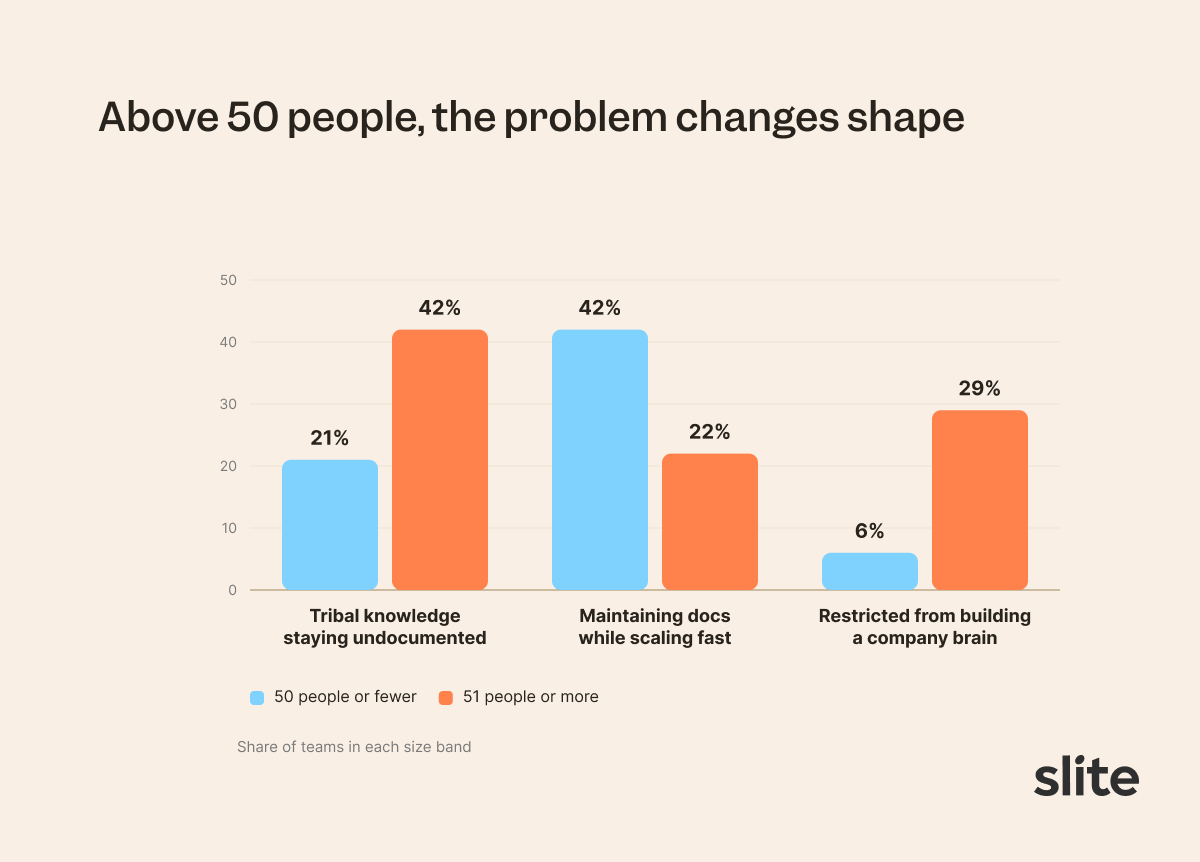
- Above 50 people, the problem changes shape: tribal knowledge becomes the #1 documentation pain, and teams are 5x more likely to be blocked from building a brain at all.
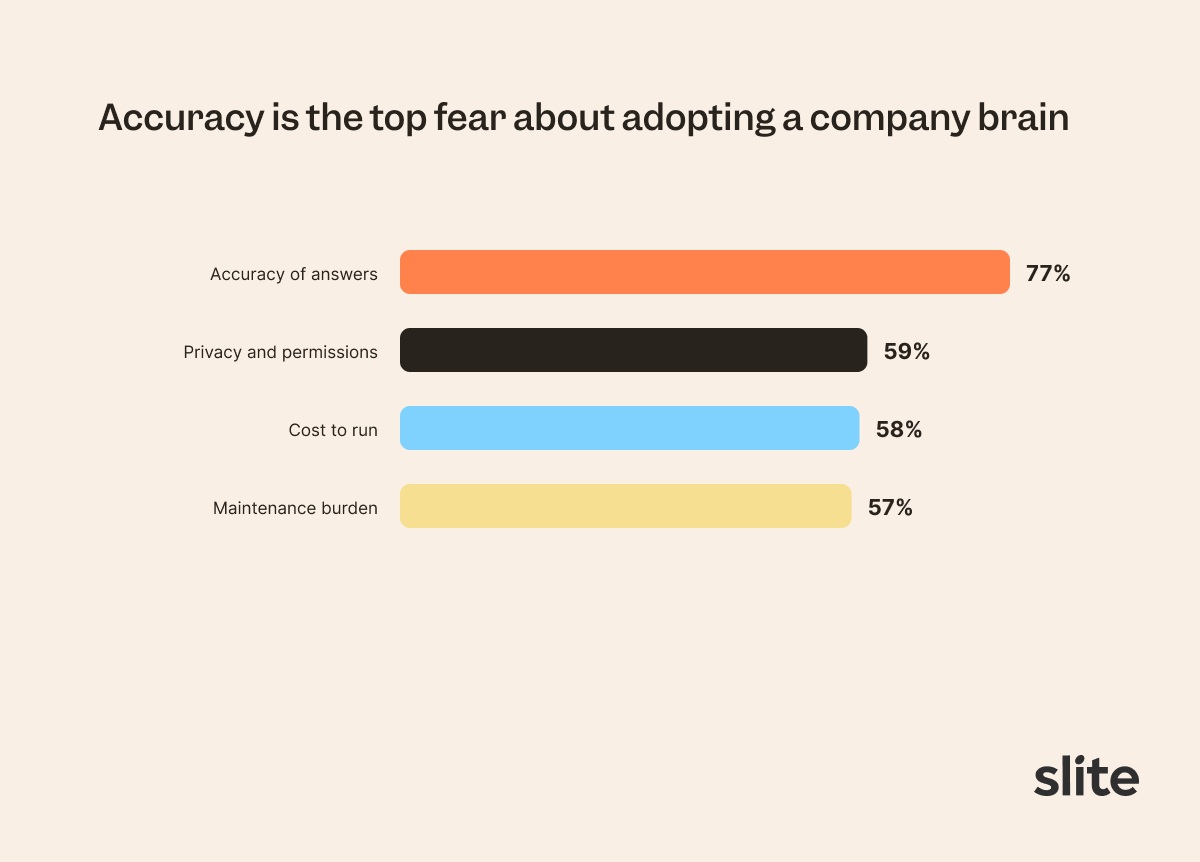
- Accuracy is the top adoption fear (77%), and the fix people trust most is a named human owner (78%).
- 56% of teams admit company knowledge lives in Slack threads. 22% still run on email chains.
How we ran this survey
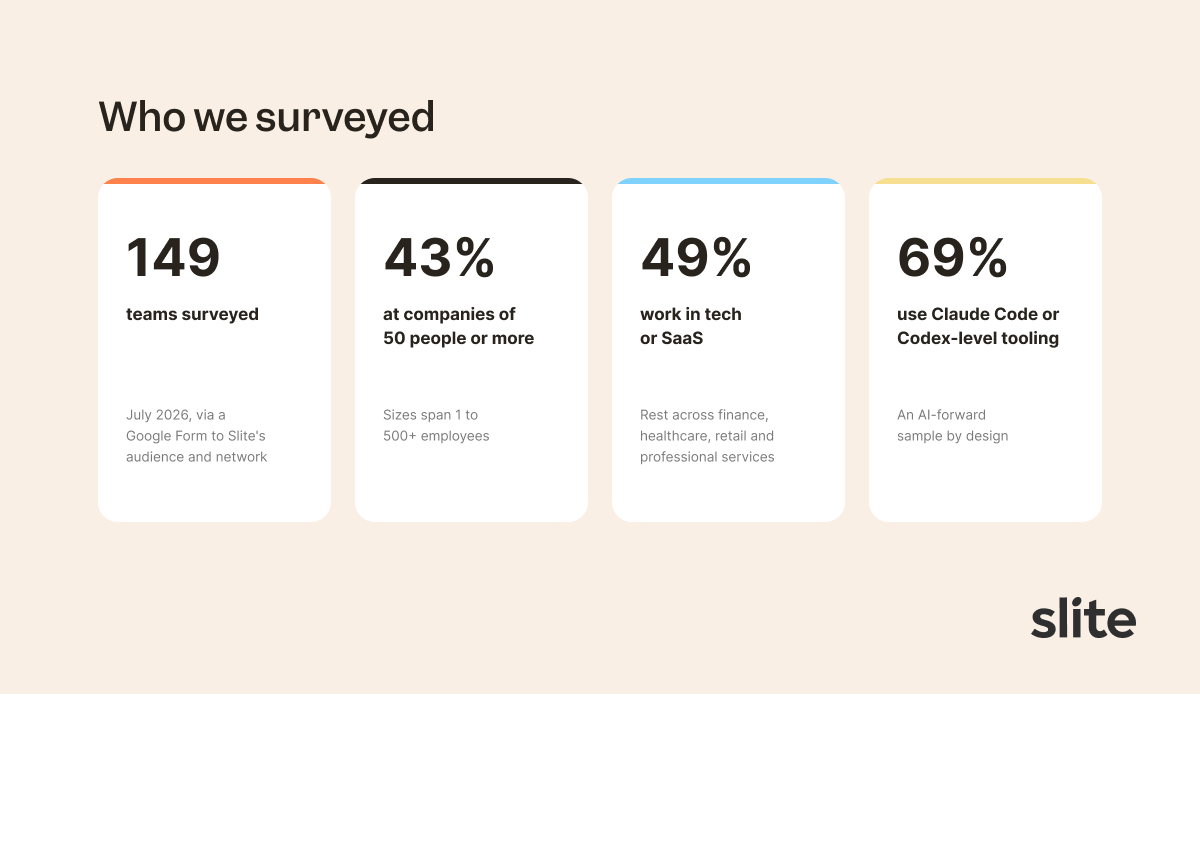
We collected 149 responses in July 2026 through a Google Form promoted to our audience and network, alongside interviews with a dozen companies preparing company brain solutions for the ebook.
Overall, our respondents come from AI-forward teams:
- 49% work in tech or SaaS,
- 69% use Claude Code or Codex-level tooling or better,
- and 43% work at companies of 50 people or bigger.
This survey is a snapshot of the teams closest to the trend, the ones we most wanted to hear from.
Finding 1: fewer than 1 in 5 teams have a company brain that works
Awareness of the term is remarkable. 70% of respondents have heard of the company brain, and a quarter of them learned it directly from tech Twitter (Andrej Karpathy's LLM-wiki idea, Garry Tan's GBrain).
Most of the rest picked it up from LinkedIn, YouTube, and articles, which means the idea escaped its birthplace within a single quarter.
However, adoption tells a different story.
Among the teams who answered, we're seeing that:
- only 19.6% say they have a company brain that works flawlessly,
- 41% want one and haven't started,
- 24% tried to build one and gave up,
- 15% aren't allowed to try
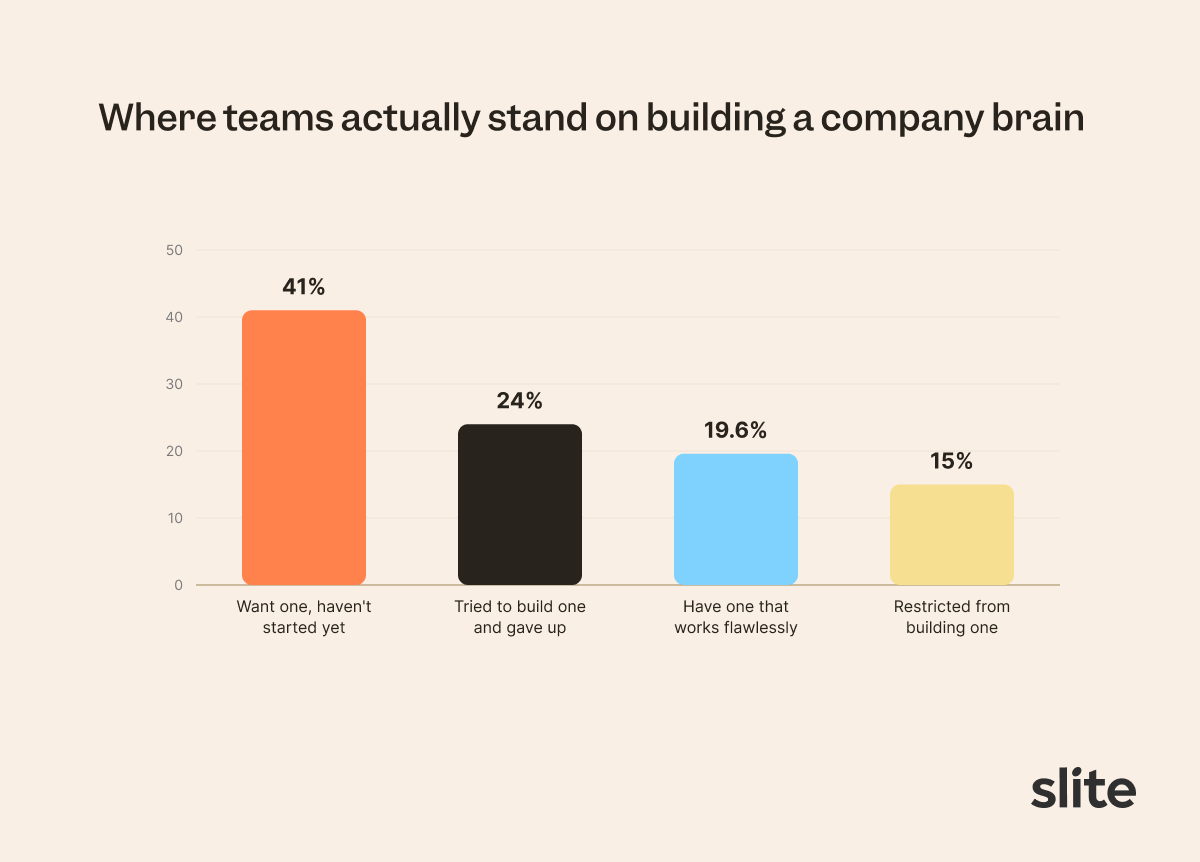
What this means: the company brain category has reached very high awareness among AI-forward teams, but full adoption hasn't even reached a quarter of them.
And given that our audience and network skew toward teams already invested in knowledge tooling, treat that 19.6% as a ceiling, and probably an ambitious one.
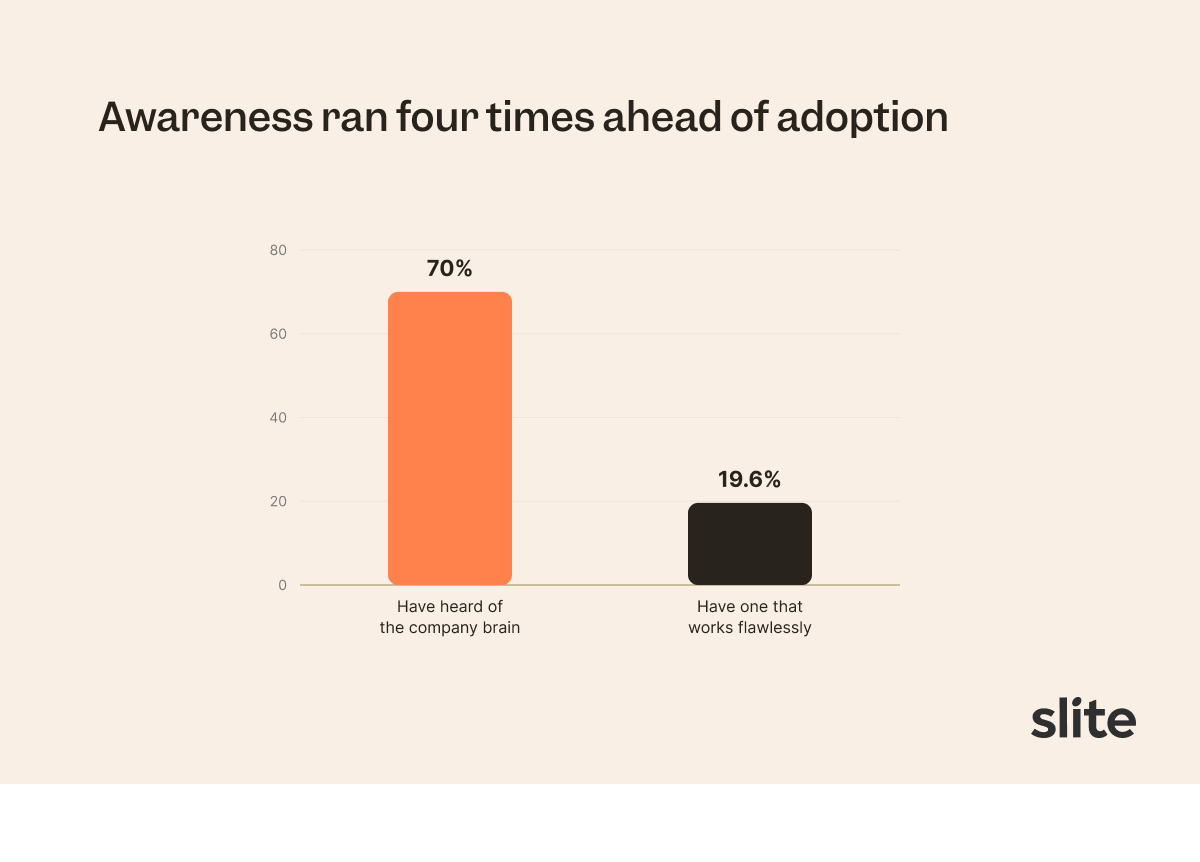
For most companies out there, we'd presume the real number is much, much lower.
Finding 2: most DIY company brains die of maintenance
Among teams that actually attempted a brain, 55% abandoned it, and the reason is almost never the technology. It's the upkeep.
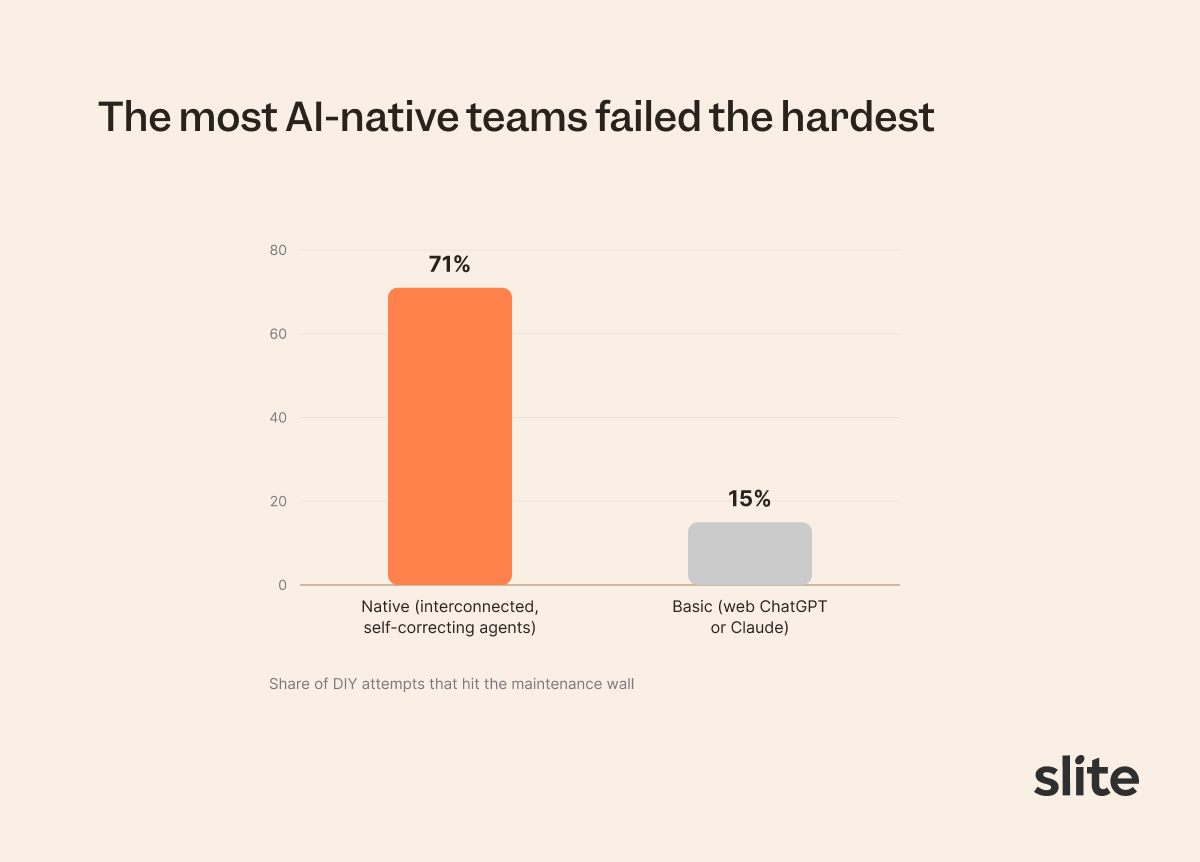
The failure rate rises with AI fluency.
Among respondents running interconnected, self-correcting agents, 71% of attempts ended at the maintenance wall, versus 15% of basic AI users.
One of the reasons for this that we think is happening is that most AI-native teams attempt the most ambitious brains, wired into the most tools, holding the most context.
A three-person team with 40 documents can keep its brain alive with occasional gardening.
A team feeding eight agents from five systems is maintaining a living product.
Maintenance burden scales with the amount of context the brain has to work with. And among our respondents, better tooling didn't remove the upkeep.
Ironically, it often pushed teams toward attempts so ambitious they ended up dropping the project altogether.
The market is also early enough that this work has no price tag yet: when we asked teams running a brain to estimate what it costs them each month in tokens and dollars, the most common answer was some version of "no idea."
Even the person championing the project internally often can't keep up with feeding it:
"You have to be very purposeful about feeding the machine, and even with the best of intentions from me trying to drive that thing, I wasn't doing it either." - Glen Sykes, Chief Product Officer, Spoor
Finding 3: above 50 people, the problem changes shape
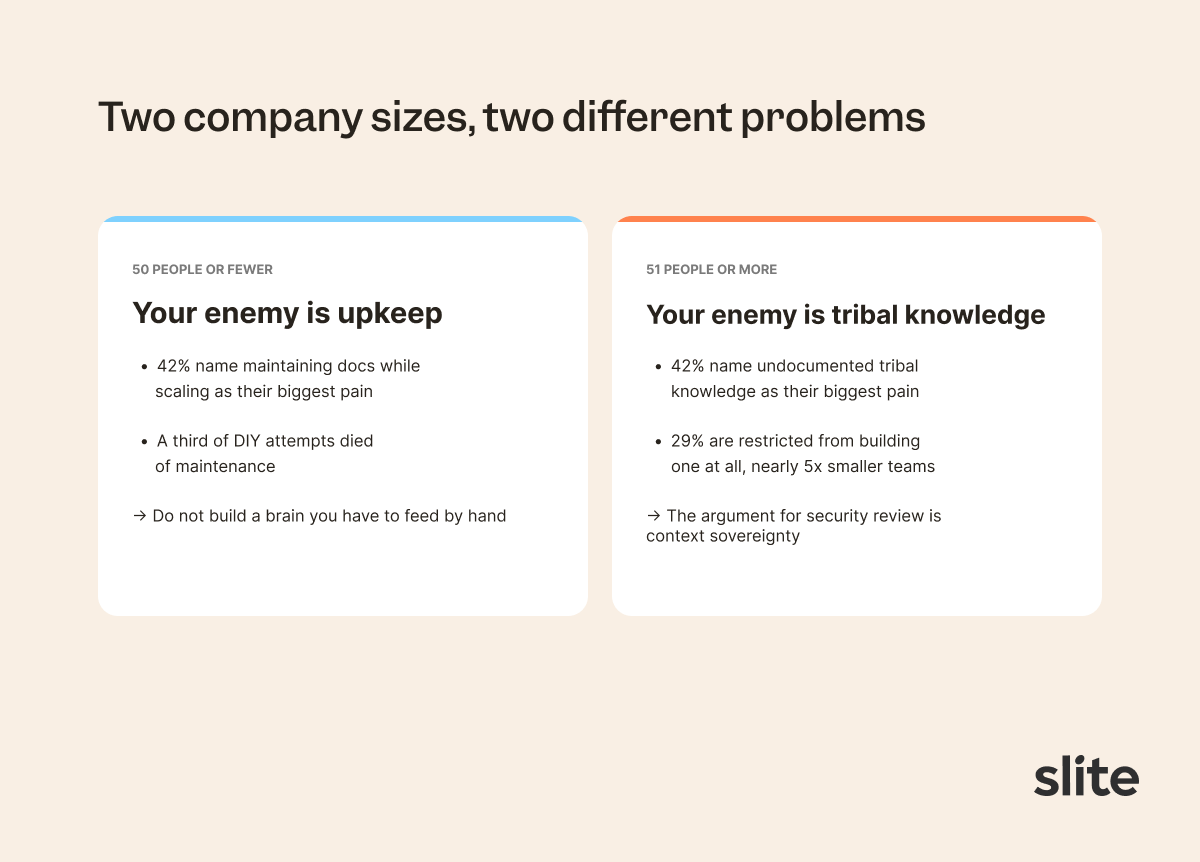
Below 50 employees, the dominant documentation pain we're seeing is keeping docs alive while scaling fast (42%), and a third of DIY brain attempts ended in maintenance failure.
Above 50, tribal knowledge staying undocumented takes over as the #1 pain, named by 42% versus 21% of smaller teams.
Knowledge isn't drifting in these companies. It never got written down at all, and it walks out the door with every departure.
Additionally, teams above 50 people are nearly 5x more likely to say they can't build a company brain because they're restricted (29% vs 6%).
So the two failure modes are almost mirror images:
- Small teams break on maintenance.
- Larger teams break in compliance and procurement.
There's a reason for the caution for the growing companies: a company brain reads across every source, which means whoever runs it holds the most complete, portable copy of the company that has ever existed in one place.
We cover this context sovereignty problem at length in our ebook → The ontology of company brain.
Finding 4: the top fear is accuracy, and the fix people trust is human
Asked what would worry them most about adopting a company brain, respondents put accuracy first at 77%, ahead of privacy (59%), cost (58%), and maintenance (57%).
Privacy, notably, is flat across company sizes. It is not an enterprise-only concern.
Then we asked what would make them trust a piece of documentation.
The top answer, at every company size we measured, was the same: a named human owner who verified it (78%).
A link to a live source of truth came second (63%). Recency third (56%).
And 18% picked the bleakest option on the list: they never fully trust documentation at all.
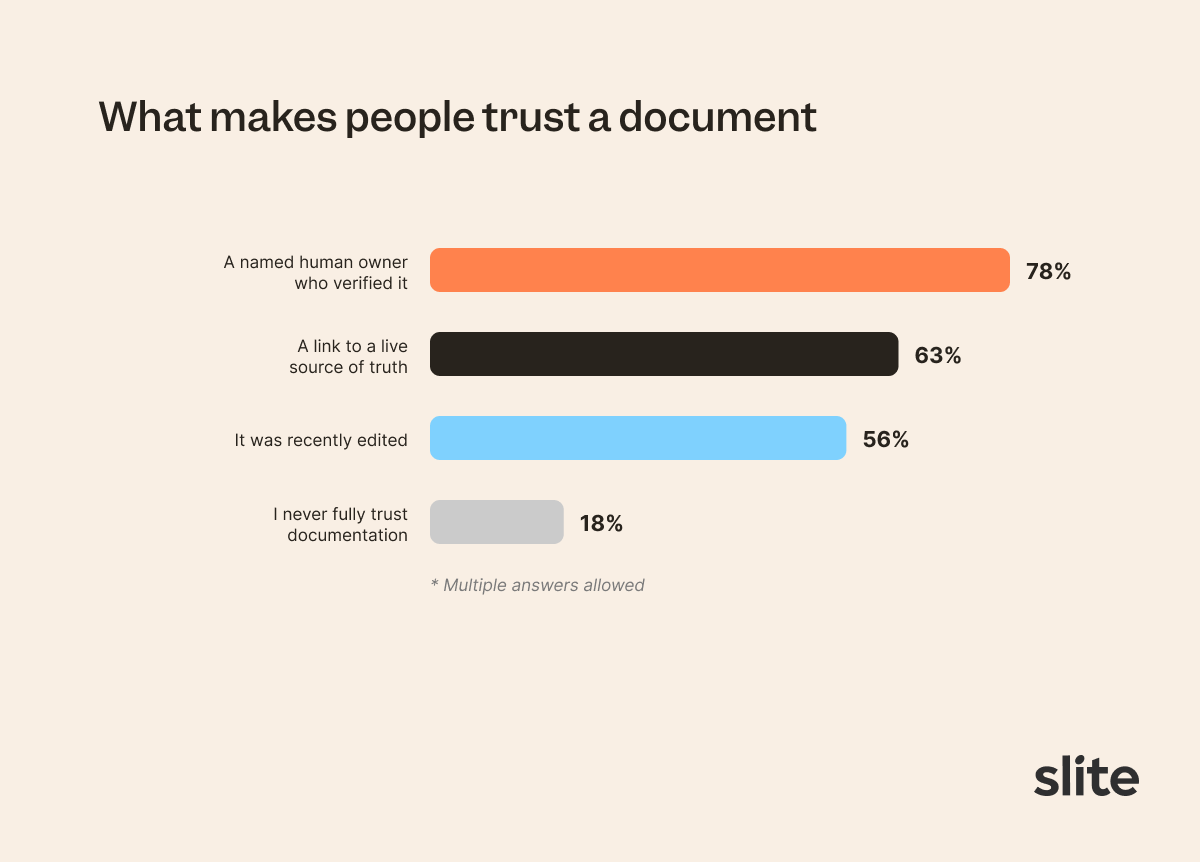
In the AI era, when generating a plausible-looking document costs nothing, people's trust didn't shift to better AI. It shifted harder onto humans.
People are going back to trusting human judgment, and actively searching for it: a named human owner on a doc is the one signal they really value.
The respondents saw the mechanism clearly:
A stale doc no longer just misleads a human who might double-check, it silently propagates into proposals, client deliverables and automations. The cost shifted from 'someone wastes 20 minutes' to 'the system confidently executes on wrong facts.
We've written before about the hidden dangers of stale documentation; the survey suggests agents turned those dangers from a nuisance into a liability.
Finding 5: 56% admit their company's knowledge lives in Slack
86% of surveyed teams have a dedicated wiki or knowledge base. And yet:
- 56% say knowledge lives in Slack or Teams threads
- 65% in shared drives and folders
- 22% in email chains
Knowledge leaks into chat at every company size we measured (roughly 50 to 65% everywhere), even at companies with active knowledge bases.
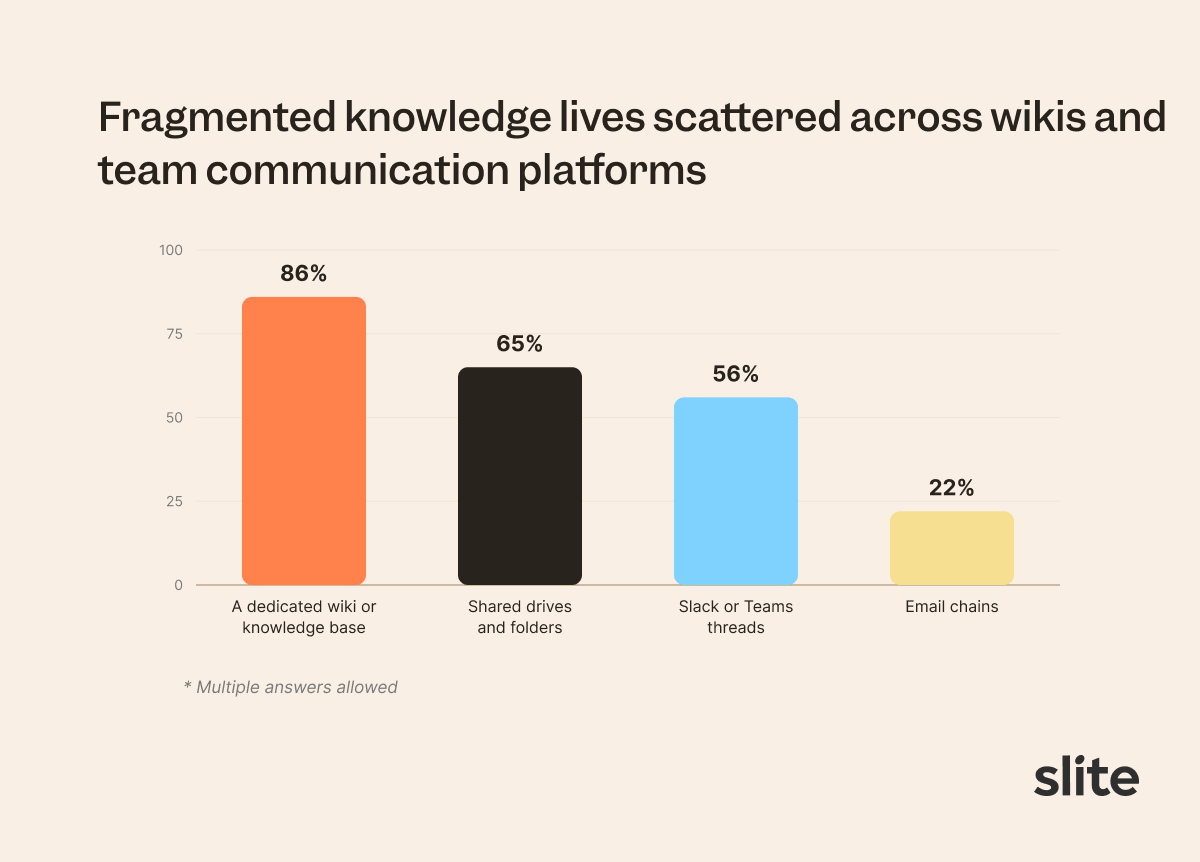
And larger companies don't consolidate, they stack: more wiki, more drives, more chat, more email, all at once.
We're also seeing that once knowledge lands in Slack, people rarely go back and turn it into a document the team can use.
"If something is answered in Slack, it is rarely ever turned into knowledge the team can use." - survey respondent, CXO, 11-50 employees
This fragmentation is exactly what a company brain exists to answer, and it can even become an advantage.
If your team has a culture of oversharing in Slack, narrating what you're doing and why a decision was made in the place everyone already looks daily, that knowledge doesn't need to be rewritten into a document to be seen today.
It does need to be retrievable later.
A company brain that sits across your platforms and tools can tap into those messages and pull them back up whenever they're relevant, turning that running commentary into a permanent memory layer without forcing anyone to document more.
It's why every company preparing a company brain solution we interviewed has stopped trying to fix human discipline and started moving capture into the work itself.
Read more about the Capture at the place of work is chapter 7 of the ebook.
What to do with all this
If you're under 50 people: your enemy is upkeep. Don't build a brain you have to feed by hand; you already know from this data how that ends.
If you're over 50: your enemy is undocumented tribal knowledge, and probably your own approval chain. The argument to bring to security review is context sovereignty, owning your context layer instead of renting it from a platform.
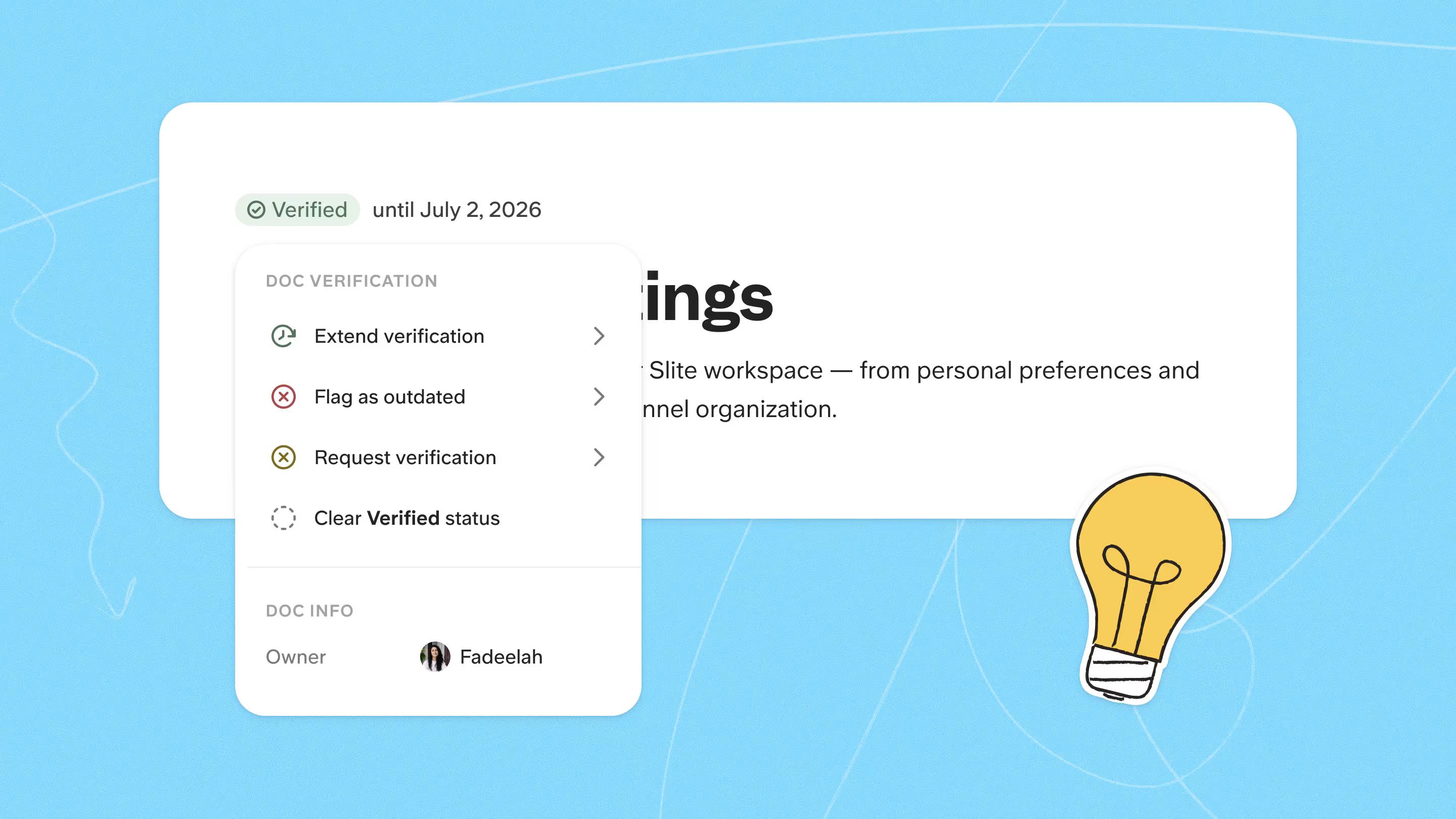
Either way, the trust finding is the design requirement: whatever your brain looks like, answers need a human-verifiable trail.
Verified by is not a nice-to-have feature anymore that solutions like Slite offer.
It's the one thing 78% of your colleagues say they'd actually believe.
Final thoughts
The company brain went from tweet to YC thesis faster than any knowledge-management idea we've tracked.
The data says the excitement is real and the operational reality hasn't caught up: awareness at 70%, working adoption below 20%, and a failure mode (maintenance) that gets worse precisely for the teams most capable of building.
That gap is closing from both ends, tools automating the upkeep, and teams learning that a brain nobody feeds starves on schedule.
The full picture, including the architecture patterns and the interviews with companies preparing company brain solutions, is in our ebook The ontology of the company brain.
FAQ
What is a company brain?
A company brain takes everything your company knows, the stuff in docs, people's heads, and scattered across tools, and makes it usable as answers or context, for people and AI agents alike.
How many companies have a company brain?
In our July 2026 survey of 149 AI-forward teams, 19.6% reported having a company brain that works. 41% want one but haven't started, 24% tried and abandoned it, and 15% are restricted from building one.
Why do DIY company brains fail?
Maintenance. 55% of teams that attempted one gave up, citing the ongoing work of feeding and updating it. The burden scales with how much context the brain holds.
What's the biggest concern about adopting a company brain?
Accuracy, cited by 77% of respondents, ahead of privacy (59%), cost (58%), and maintenance (57%).
What makes people trust documentation?
A named human owner who verified it (78%), a link to a live source of truth (63%), and recent edits (56%). 18% say they never fully trust documentation.